Advertisements
Advertisements
Question
Velocity versus time graph of a ball of mass 50 g rolling on a concrete floor is shown in Fig. 9.1. Calculate the acceleration and frictional force of the floor on the ball.

Advertisements
Solution
From the given velocity − time graph, acceleration of the bll,
a = `("Change in velocity")/("Change in time")`
= `(0 - 80)/(8 - 0) "ms"^-2`
= −10 ms−2
Frictional force of the floor o the ball = m
= (0.05 × 10) N (∵ m = 50g = 0.05 kg)
= 0.5 N
APPEARS IN
RELATED QUESTIONS
A blacksmith hammers a hot piece of iron while making a tool. How does the force due to hammering affect the piece of iron?
A rocket has been fired upwards to launch a satellite in its orbit. Name the two forces acting on the rocket immediately after leaving the launching pad.
One or more forces are acting in the following example. Name them.
Squeezing sugarcane juice with a squeezer: ______
Explain in your own words and give one example.
The force of friction
Why powder is sprinkled on a carrom board?
Write an answer to the following question in your own words.
What is meant by weight?
Solve the following crossword puzzle.
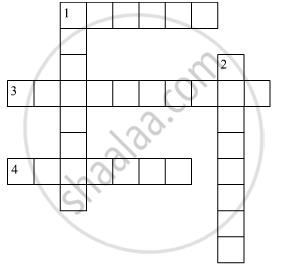
Down:
(1) _______ force is to be applied to push a scooter that has failed.
(2) _________ force can be used to pick up scattered pins.
Across:
(1) A _______ pulls an iron nail towards itself.
(3) ________ force was used when the farm was ploughed with a tractor.
(4) It is due to the force of _________ that raindrops fall to the ground.
List out the types of forces on the basis of contact.
When two bottles with magnets float on water and are brought close together, they move toward each other. Which condition causes this?
Contact forces arise mainly due to ______.
