Advertisements
Advertisements
Question
Use the suitable verb.
I ______ the book.
Options
read
reads
Advertisements
Solution
I read the book.
APPEARS IN
RELATED QUESTIONS
The following expression is a combination of a noun preceded by a describing word.
modern technique
Replace the describing word with as many others as you can, that goes with the underlined noun.
Change the following sentence to the other voice.
Our army has defeated the enemy.
Fill in the gap with appropriate Pronoun.
All your friends will guide ______.
Read the following sentences carefully and underline the preposition.
Julian placed her lunchbox inside her bag.
Look at the list of words. Read the instructions and make Vocabulary Frames
| notice | hide | quarrelling | quickly |
| tired | wide | pretty | threw |
Top Right Corner: Write the word’s definition.
Top Left Corner: Write the word’s opposite.
Lower Left Corner: Write a sentence that uses the definition of the word.
Lower Right Corner: Draw a graphic to help you visualize the concept.
In the Centre: Write the word.

Rewrite the sentence using the word in the bracket.
We play cricket on Sundays. (Aravind)
UTHIRA is an event conducted by the NSS unit of ABC Hr Sec School. Imagine you are a volunteer and help a parent fill in the following registration form. (Invent necessary details)
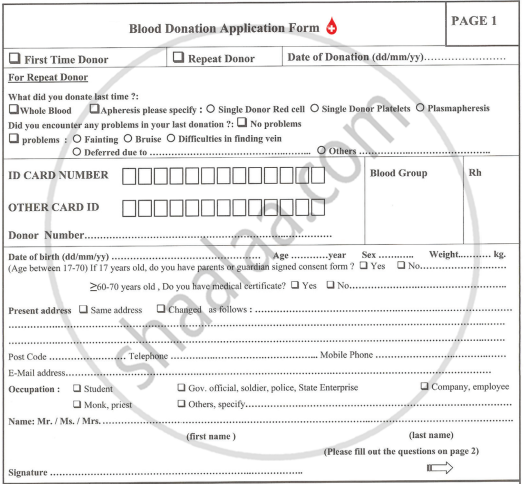

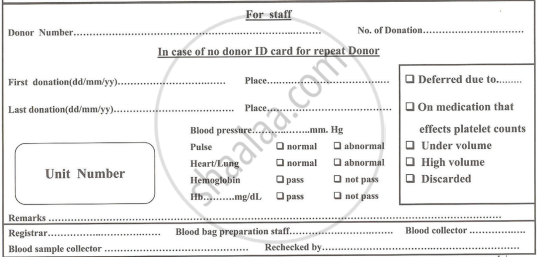
Replace the comparative adjective in the following sentence with their positive form.
Gold is not more useful than iron.
Rewrite the following using a complete word instead of a contracted form.
...when you’re through.
We have seen that clauses are parts of a sentence, and they are classified as main and subordinate or dependent clauses. Dependent clauses can be further classified as follows according to the work they do in a sentence.

How do we decide whether a clause is a noun clause, an adjective clause or an adverb clause? There is a simple rule - we can replace an adverb clause with an adverb, an adjective clause with an adjective and a noun clause with a noun.
Look at the following examples -
- But I don’t know the answer. (Noun)
But I don’t know what they want. (Noun clause) - He told us a funny story. (Adjective)
He told us a story that was funny. (Adjective clause) - They went away. (Adverb)
They went when you were talking to your friend. (Adverb clause)
Now complete the following on your own :
- But I don’t know ____________.
- He told us ____________.
- They went ____________.
