Advertisements
Advertisements
Question
Use a musculoskeletal diagram to review the roles of key muscles and bones in each activity.
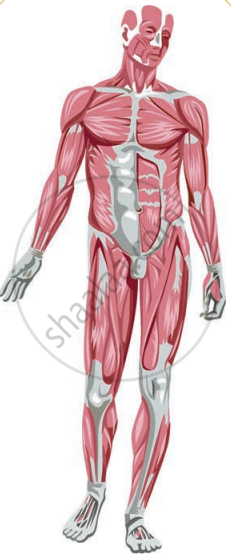
Chart
Advertisements
Solution
Muscles contract and pull on bones at the joints to produce movement. Bones support the body and act as levers, while joints allow the bones to move.
| Activity or movement | Key muscles | Main bones and their roles |
|---|---|---|
| Running, jogging and sprinting | Quadriceps straighten the knee; hamstrings bend it; calf muscles help push the foot off the ground. | The pelvis, femur, tibia and fibula support the legs and help create running movement. |
| Jumping and landing | Gluteal muscles, quadriceps and calf muscles help propel the body upward and control landing. | The pelvis and leg bones bear and transfer the forces of jumping and landing. |
| Bicep curls | The biceps bend the elbow; the triceps straighten it. | The humerus, radius and ulna form the upper arm and forearm and move at the elbow joint. |
| Push-ups and push-and-pull movements | The chest, shoulder and triceps muscles help push; the back and arm muscles assist with pulling. | The humerus, radius, ulna and shoulder-girdle bones support arm movement. |
| Balancing | Core, hip and leg muscles make small adjustments to keep the body steady. | The spine, pelvis and leg bones help support posture and balance. |
shaalaa.com
Is there an error in this question or solution?
