Advertisements
Advertisements
Question
To detect the obstacles in their path, bats produce ______.
Options
Infrasonic waves
Ultrasonic waves
Electromagnetic waves
Radio waves
Advertisements
Solution
To detect the obstacles in their path, bats produce ultrasonic waves.
APPEARS IN
RELATED QUESTIONS
Distinguish between loudness and intensity of sound.
Write the audible range of frequency for the normal human ear.
What type of wave is represented :
(a) by density-distance graph?
(b) by displacement-distance graph?
What is the difference between a compression and a rarefaction in a sound wave? Illustrate your answer with a sketch.
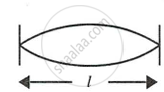
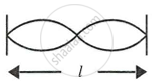
Fig. shows three ways in which a string of length l in an instrument can vibrate.
 |
 |
 |
| (i) | (ii) | (iii) |
- Which of the diagram shows the principle note?
- Which vibration has the frequency four times that of the first?
- Which vibration is of the longest wavelength?
- What is the ratio of the frequency of the vibration in (i) and (ii)?
Select the correct option:
If the frequency of a wave is 25 Hz. the total number of compressions and rarefactions passing through a point in 1 second is :
Match the following.
| 1. | Tuning fork | The point where density of air is maximum |
| 2. | Sound | Maximum displacement from the equilibrium position. |
| 3. | Compressions | The sound whose frequency is greater than 20,000 Hz. |
| 4. | Amplitude | Longitudinal wave. |
| 5. | Ultasonics | Production of sound. |
Longitudinal waves are produced in solids liquids and also in gases.
