Advertisements
Advertisements
Question
This is a picture of the most beautiful specimen of Khilji architecture, which was added as an entrance to the Qutb complex in Delhi.

With reference to the reign of this ruler, mention two important features of the Market control policy
Advertisements
Solution
Alauddin set up three markets at Delhi – one for food grains, the second for cloth and the third for horses, slaves, and cattle. Each market was under the control of an officer called Shahna.
- The prices of all commodities were fixed and the prices of essential items were kept low.
- Market officers were appointed to keep a strict watch on the prices, weights, and the activities of the traders.
- Anyone caught hoarding goods or cheating customers in price or weight was severely punished.
- State warehouses were set up and stocked with food grains.
RELATED QUESTIONS
What evidence do we have to prove that Alauddin was a patron of art and learning?
This is a picture of the most beautiful specimen of Khilji architecture, which was added as an entrance to the Qutb complex in Delhi.
With reference to the reign of this ruler, mention two important features the Reorganization of the army
Answer the following question briefly:
Describe the important developments which took place in the following fields during the Sultanate period:
Language
Fill in the blank:
New musical instruments such as the ___________ were developed during the Sultanate period.
New types of food, such as bread and wine, became a part of Indian cuisine during the Sultanate period.
Answer the following question briefly:
Describe the main features of society during the Sultanate period with reference to the aristocracy.
Answer the following question briefly:
Describe the main features of society during the Sultanate period with reference to the peasants.
This is a picture of a musical instrument used in Hindustani classical music. The name is derived from the Persian words—‘seh’ (meaning ‘three’) and tar’ (meaning ‘strings’).
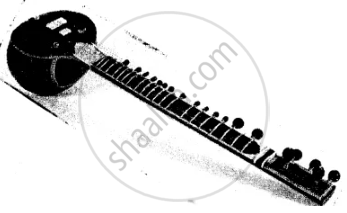
Identify the musical instrument.
This is a picture of a musical instrument used in Hindustani classical music. The name is derived from the Persian words—‘seh’ (meaning ‘three’) and tar’ (meaning ‘strings’).
During which period in medieval Indian history was this instrument invented?
Describe the important developments which took place in the following field during the Sultanate period:
Dress
