Advertisements
Advertisements
Question
The question has four options. Choose the correct answer:
Stomach in vertebrates is the chief site of digestion of
Options
protein
carbohydrates
fats
all
Advertisements
Solution
Protein
APPEARS IN
RELATED QUESTIONS
How are fats digested in our bodies? Where does this process take place?
Fat is completely digested in the ______.
What causes movement of food inside the alimentary canal?
Draw a labelled diagram of the human digestive system. With the help of this diagram, describe the process of digestion of food in man (humans).
What is meant by dental caries?
Mention two ways in which the ileum of the mammal is adapted for the absorption of digested food.
________ is the largest gland in the body.
What is the role of the liver and the pancreas respectively in the digestion of food?
Write true or false for the below statement. Rewrite the false statements correctly.
All the absorbed nutrients are immediately required by the body.
Differentiate between.
Mechanical digestion and Chemical digestion
Write short answers
What is ingestion?
Write short answers
Write the names of three enzymes which are found in pancreatic juice.
Correct the spellings: Reninne
The question has four options. Choose the correct answer:
The dental formula of human beings is
The coiled middle portion of the small intestine which is 2.5 meters long is the ______.
Match the following:
| 1. | Pancreatic juice | a. | Breaking starch |
| 2. | Salivary enzymes | b. | Digestive enzymes |
| 3. | Salivary gland | c. | Alimentary canal |
| 4. | Digestive tract | d. | Parotid |
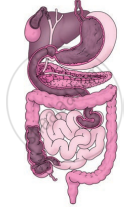
Label the following parts in Figure and name them.
- The largest gland in our body.
- The organ where protein digestion starts.
- The organ that releases digestive juice into the small intestine.
- The organ where bile juice gets stored.
Solve the crossword given as Figure.

| Across | Down | ||
| 1. | Cream-coloured digestive gland | 2. | Feeds with the help of pseudopodia |
| 3. | Undigested excretory solid residues | 6. | Total number of molars in one jaw of an adult |
| 4. | Organ that mixes saliva with the food | 8. | Largest gland |
| 5. | Point of defecation | 9. | Watery secretion in the mouth |
| 7. | Stored in gall bladder | 11. | A ruminant |
| 10. | Finger-like outgrowth in the small intestine | 12. | Form of food chewed by ruminants |
| 13. | Kind of taste buds | ||
| 14. | Kills bacteria in the stomach | ||
Urea is a main excretory product in humans. How is it formed?
How does tooth enamel get corroded? What is the preventive measure for this?
