Advertisements
Advertisements
Question
The paragraph about how tea came to India brings out the difference between history based on oral sources and ‘recorded history’. Discuss how the author brings it out.
Advertisements
Solution
The author discusses the journey of tea to India. He first addresses the oral sources. Tea, for example, has been used as a medicinal herb in India since ancient. Here, it is clearly stated that this knowledge is 'considered' by historians and not confirmed. The author then provides historical details about how the British established plantations in the nineteenth century and how, in the 1770s, the British East India Company tried to grow tea but failed. This knowledge is presented at a specified time and contains sufficient evidence, hence it is based on "recorded history."
APPEARS IN
RELATED QUESTIONS
Form pairs and write the process of making tea in a step-by-step manner.
Write the names of as many beverages as you can within two minutes. What do the following beverages remind you of? Draw word webs to show your associations.
 |
 |
 |
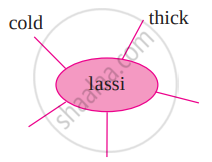 |
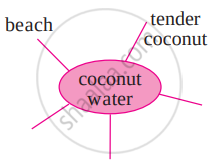 |
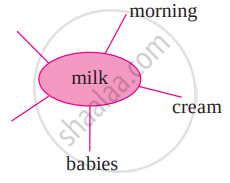 |
Where are tea estates located?
What are botanical names? How are they decided?
What does tea contain? What does it not contain?
Who was Emperor Shennong?
How did tea reach other parts of the world?
What is the difference between legends or stories and history?
Can you guess the origin of the Marathi word ‘chaha’?
What are the good qualities of tea?
Why are the cups only half-filled in Chinese tea ceremonies?
What is the difference between ‘claim’ and ‘fact’?
Make a bilingual glossary of the various spices used in the kitchen.
List all the names of Geographical places mentioned in the (The Story of Tea) passage.
List the words related to agriculture from the (The Story of Tea) passage.
List the words related to chemistry from the (The Story of Tea) passage.
Complete the following sentence with the help of the (The Story of Tea) passage:
Camellia sinensis is an evergreen plant that grows in ______.
Complete the following sentence with the help of the (The Story of Tea) passage:
In many countries around the world, tea drinking is an ______.
Complete the following sentence with the help of the (The Story of Tea) passage:
Our body produces chemicals called ______.
Prepare a flow chart to show the growth and journey of tea from the plantation to our homes. Use information from the lesson.

From the (The Story of Tea) passage, find all the words or pairs of words that begin with ‘tea’. Examples: teapot, tea plants.
