Advertisements
Advertisements
Question
The figure given below represents an experimental setup with a weighing machine to demonstrate a particular process in plants. The experimental setup was placed in bright sunlight. Study the diagram and answer the following questions.
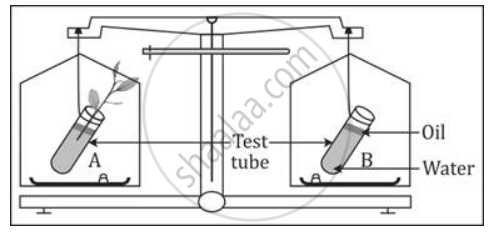
Define the above mentioned process.
Advertisements
Solution
Transpiration is a process by which water is lost in the form of water vapour from aerial parts of the plant.
RELATED QUESTIONS
How does temperature, light intensity and wind affect transpiration?
(a) State whether the following statement are True or False.
(b) Rewrite the false statement in (a) above in the correct form by changing either the first or the last word only.
Transpiration creates a pull for the upward movement of the sap.
Given below is an apparatus which was setup to investigate a physiological process in plants. The setup was placed in bright sunlight. Answer the questions that follow:
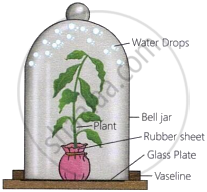
- Name the process being studied. Define the process.
- Why was the pot enclosed in a rubber sheet?
- Mention two external factors which can accelerate the above process.
- List two adaptations in plants to reduce the above process.
- Draw a neat, labelled diagram of a stomatal apparatus.
Given below is an apparatus which has setup to investigate a physiological process in plants. The setup was placed in bright sunlight. Answer the questions that follow:
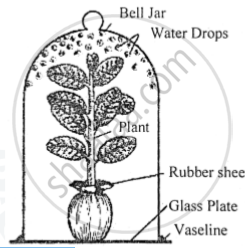
Why was the pot enclosed in a rubber sheet?
Answer the following (only in few words);
In which form, water comes out in transpiration?
Give Reasons for the following:
Why do some herbaceous plants show wilting of leaves during mid-day which again recover in the evening?
Differentiate between transpiration and guttation.
Write the functional activity of the following structure:
Cuticle
