Advertisements
Advertisements
Question
The diagram below shows part of the capillary bed in an organ of the human body. Some of the blood arriving at the capillaries at points labeled A, moves out into the spaces between the tissue cells. Study the diagram and answer the questions that follow:
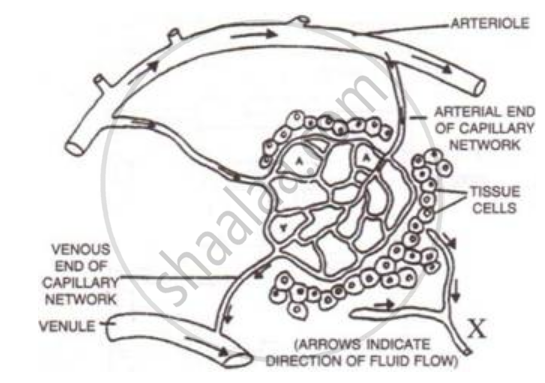
State two important functions performed in our body by the fluid present in vessel X.
Advertisements
Solution
The lymph supplies nutrition and oxygen to those parts where blood cannot reach. The lymph drains away excess tissue fluids and metabolites and returns proteins to the blood from tissue spaces.
RELATED QUESTIONS
Name the type of T-lymphocyte which secretes perforins.
Which of the following are 'scavenger cells'?
(a) Lymphocytes
(b) Erythrocytes
(c) Basophils
(d) Macrophages
Name a circulatory fluid in the human body other than blood.
A liquid X of colour Y circulates in the human body only in one direction: from body tissues to the heart. Among other things, liquid X contains germs from cells and dead cells. The liquid X is cleaned of germs and dead cells by a special type of white blood cells called Z. This cleaned liquid is then put into the blood circulatory system in subclavian veins.
- What is (i) liquid X, and (ii) colour Y?
- What is Z?
- The liquid X is somewhat similar to a component of blood. Name this component.
- Why is liquid X not red?
Multiple Choice Questions
The chief function of lymph nodes in mammals is to:
Which kind of cells are found in the lymph?
For which of the following reason it is much easier for a small animal to run uphill than for a large animal?
What is the other name of 'tissue fluid'? Write its two functions.
Name the following:
Part of lymphatic system concerned with absorption of fats from the intestine.
Name the following:
A special lymphatic node on the sides of the neck.
