Advertisements
Advertisements
Questions
State the economically important uses of archaebacteria.
State two economically important uses of archaebacteria.
Advertisements
Solution
- These bacteria are special since they live in some of the harshest habitats, such as extreme salty areas (halophiles), hot springs (thermoacidophiles), and marshy areas (methanogens).
- Archaebacteria differ from other bacteria in having a different cell wall structure, and this feature is responsible for their survival in extreme conditions.
- Methanogens are present in the gut of several ruminant animals such as cows and buffaloes and they are responsible for the production of methane (biogas) from the dung of these animals.
Notes
Students should refer to the answer according to their questions.
APPEARS IN
RELATED QUESTIONS
State the economically important uses of heterotrophic bacteria.
Find out what do the terms algal bloom signify.
Find out what do the terms red-tides signify.
The binomial name of pigeon is ______.
True (or) False. If false write the correct answer.
In the year 1979, Five kingdom classification was proposed.
Match the following.
| 1. | Monera | Moulds |
| 2. | Protista | Bacteria |
| 3. | Fungi | Neem |
| 4. | Plantae | Butterfly |
| 5. | Animalia | Euglena |
List out the five kingdoms classification
Write any two merits of Five Kingdom classification.
Explain about five kingdom classification
See the Diagram and write the kingdom :
Pictures of some living organisms are given below. Identify the kingdom to which each of these belong and write the kingdom name in the blanks provided.
| a. |  |
|
| b. | 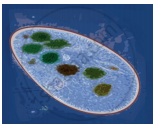 |
|
| c. |  |
|
| d. |  |
|
| e. | 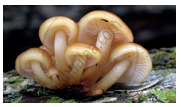 |
Write true (T) or false (F)
Blue green algae belongs to the kingdom Protista.
Write true (T) or false (F)
All prokaryotes are classified under Monera.
Prokaryotes are grouped in Kingdom ______.
Give examples for the following
Bilateral, dorsiventral symmetry is found in ______.
‘Peat’ is an important source of domestic fuel in several countries. How is ‘peat’ formed in nature?
