Advertisements
Advertisements
Question
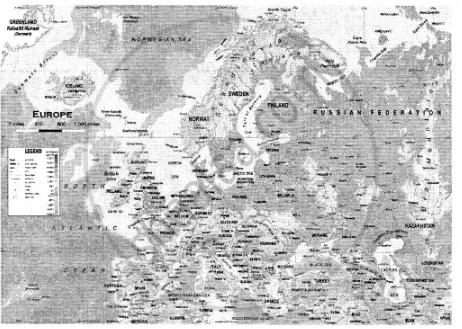
Refer to the physical map of Europe in your atlas. Moving in an anti-clockwise direction starting from the Arctic Ocean and the White Sea, observe and note down the names of all the surrounding water bodies such as seas, bays, gulfs, straits, etc. Then mark each of them on an outline map of Europe.
Advertisements
Solution

APPEARS IN
RELATED QUESTIONS
In your atlas, locate the major and minor rivers flowing through Europe. Note the names of important cities/towns that have developed on the banks of these rivers. Then tabulate your observations in your notebook using the headings given here :
- Name of the river
- Countries through which it flows
- Important town/cities situated on its banks.
Choose the correct answer:
The strait that separates Europe from Africa is the
Name the major physical divisions of Africa. Describe anyone.
Choose the correct answer.
A region well-known for olives, oleander, and orange trees:
How is the vegetation of the Mediterranean region able to withstand the summer drought conditions?
With the help of two examples from Europe, show how the vegetation of Europe is closely related to climate.
How has the wildlife of the tundra adapted to the climate?
Give geographical reasons:
The equatorial region has dense forests.
Name the winds that bring rainfall to Australia.
The platypus is considered a strange animal. Why?