Advertisements
Advertisements
Question
Read the following statements carefully and choose the correct alternative:
Assertion (A): Under Perfect Competition, each firm faces a perfectly elastic demand curve.
Reason (R): Firm is a price maker under perfect competition.
Options
Both Assertion (A) and Reason (R) are true and Reason (R) is the correct explanation of Assertion (A).
Both Assertion (A) and Reason (R) are true and Reason (R) is not the correct explanation of Assertion (A).
Assertion (A) is true but Reason (R) is false.
Assertion (A) is false but Reason (R) is true.
Advertisements
Solution
Assertion (A) is true but Reason (R) is false.
APPEARS IN
RELATED QUESTIONS
Non-price competition is ______.
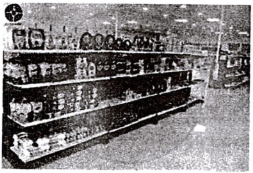
The image above shows a departmental store of a market structure.
- Identify the form of market as observed from the above image.
- Discuss the features of this market form with respect to:
- Type of product
- Entry and exit of firms
- Selling cost
Following is not the feature of perfect competition:
In monopolistic competition, there are ______.
Match the following:
| Column I | Column II | ||
| A. | Demand curve under perfect competition | (i) | Indeterminate demand curve |
| B. | Demand curve under monopoly | (ii) | Downward sloping but less elastic |
| C. | Demand curve under monopolistic competition | (iii) | Horizontal straight line |
| D. | Demand curve under oligopoly | (iv) | Elastic demand curve |
Read the following statements carefully and choose the correct alternative:
Assertion (A): Buyers are ready to pay different prices for the product produced by different firms under perfect competition.
Reason (R): The products offered for sale in the perfect market are homogeneous.
Explain any four features of perfect competition.
Discuss any four differences between monopoly and monopolistic competition.
What is meant by the term ‘price taker’?
Which statement correctly describes monopsony?
