Once upon a time, there was a king who was very fond of horses. He had 20 horses of the best breed. The horses were kept in the royal stable, and cared for by a caretaker. One night,
Advertisements
Question
Once upon a time, there was a king who was very fond of horses. He had 20 horses of the best breed. The horses were kept in the royal stable, and cared for by a caretaker.
One night, a thief stole one of the horses. Fearing punishment, the caretaker arranged the horses in the stable as shown in the picture here.
The next day, when the king came to check on the horses, the caretaker led him around the square stable. “Please count the number of horses along each side, your majesty,” he said.
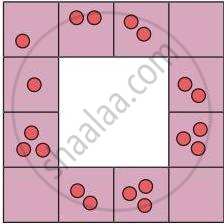
The dots above show how the horses were arranged in the stable.
The king counted 5 horses along each side. “We have 5 horses along each side and there are 4 sides. So there are a total of 20 horses, your majesty,” the caretaker explained.
Satisfied with the explanation, the king returned to his palace.
But wait, were there really 20 horses in the stable? Count the horses one by one and check! What was the mistake in the caretaker’s explanation?
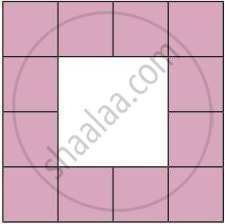
The following night, the thief stole another horse from the stable. Now, only 18 horses remained. The caretaker once again cleverly arranged the 18 horses, so that there were 5 horses on each side of the square stable. How do you think he was able to do it? Arrange the 18 horses in the stable with 5 on each side.
How many more horses can the thief steal before the king notices something is wrong? Try making the arrangements yourself.
Advertisements
Solution
Here are the step-by-step answers and explanations for the King’s Horses puzzle:
1.
- The Mistake: The caretaker counted each of the four corner horses twice (once for the vertical side and once for the horizontal side).
- The Reality: While the king counted 5 horses along each of the 4 sides \(5 \times 4 = 20\), subtracting the 4 overlapping corner horses means there were actually only 16 horses in total in the initial setup \(20 - 4 = 16\).
2. To arrange 18 horses in the stable so that every side still adds up to 5, we can place them by taking advantage of the shared corners:
- Corner Stalls: Place a total of 2 horses across the four corners (e.g., 1 horse in the top-left corner, 1 in the top-right corner, and 0 in the bottom two corners).
- Middle Stalls: Place the remaining 16 horses in the middle stalls of the four sides (e.g., 3 on top, 4 on the right, 5 at the bottom, and 4 on the left).
Check each side:
- Top side: 1 (corner) + 3 (middle) + 1 (corner) = 5
- Right side: 1 (corner) + 4 (middle) + 0 (corner) = 5
- Bottom side: 0 (corner) + 5 (middle) + 0 (corner) = 5
- Left side: 0 (corner) + 4 (middle) + 1 (corner) = 5
- Total: 2 + 16 = 18 horses.
3. The thief can steal 8 more horses, bringing the total down to 10 horses.
