Advertisements
Advertisements
Question
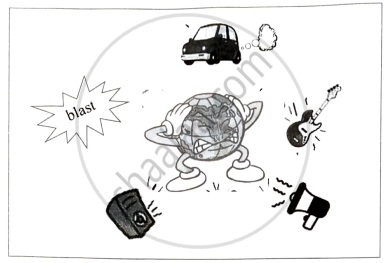
Observe the image given below and answer the questions that follow:
- Discuss any three characteristics of noise as an environmental stressor. [3]
- In any four ways, evaluate the impact of pollution on humans. [4]
Advertisements
Solution
(a) The image shows a troubled Earth with human-like features covering its ears, surrounded by sources of noise pollution, including a honking car, a screaming speaker, a loud guitar, and the word “BLAST!” indicating severe noise. This picture depicts the negative impact of environmental stresses, specifically noise pollution, on both the earth and human health.
Three Features of Noise as an Environmental Stressor.
Noise pollution is a hidden but major environmental stressor that disturbs daily living and affects both physical and mental health. There are three important properties of noise as a stressor:
- Unpredictability & Lack of Control: Noise pollution may occur unexpectedly, making it challenging for individuals to prepare or react. Loud sounds, such as honking, fireworks, or industrial noises, may trigger stress reactions in the brain, leading to increased anxiety and restlessness. Excessive noise exposure can cause feelings of helplessness and frustration, potentially leading to long-term psychological stress.
- Intensity & Duration: Noise pollution’s influence depends on its intensity and duration. Prolonged exposure to high decibel levels, such as in traffic or construction sites, can lead to hearing loss, migraines, and elevated blood pressure. Long-term exposure to moderate noise can cause chronic stress, sleep difficulties, and cardiovascular issues.
- Interference with Communication & Daily Activities: Noise pollution can impair concentration, work, and relaxation. Prolonged exposure can lead to difficulties with concentration for students, decreased productivity for professionals, and increased irritability. Excessive noise at night can disrupt sleep, causing weariness, impaired cognitive performance, and mood changes.
(b) Noise, air, water, and soil contamination all offer major health risks. There are four main ways it impacts people:
- Physical Health Issues & Chronic Diseases
- Noise Pollution: Prolonged exposure to loud noise can cause hearing impairment, tinnitus (ringing in the ears), and raise the risk of heart disease from high blood pressure.
- Air Pollution: Pollutants including carbon monoxide, sulfur dioxide, and particulate matter can cause respiratory disorders like asthma, bronchitis, and lung infections. Long-term exposure can lead to lung cancer and decreased lung function.
- Water & Soil Pollution: It can cause diseases such as cholera and typhoid, while chemicals in food from polluted soil can cause stomach issues and poisoning.
- Psychological Stress & Mental Health Decline: Continuous exposure to outside noise, such as traffic, construction, or loud music, can lead to increased stress, anxiety, and depression. Pollution may damage brain function, causing memory issues, decreased attention span, and cognitive decline in children and adults.
- Disruption of Sleep & Productivity: Environmental stresses, such as noise and air pollution, can disturb sleep patterns, limiting physical recovery.
- Insomnia
- Daytime fatigue and poor concentration
- Lower productivity at work and school.
- Weakened immune system leads to increased sensitivity to diseases.
- Negative Impact on Childhood Development: Early exposure to excessive noise and pollution can lead to problems in cognitive development, memory recall, and language skills. Air pollution can negatively impact fetal development, leading to premature births, low birth weight, and developmental abnormalities. Noise pollution may disturb children’s concentration at school, causing academic and behavioral challenges. Prolonged exposure to noise can negatively impact health, mental well-being, and general quality of life, despite being considered minimal annoyance.
