Match the pairs. A. Paracetamol B. Chloramphenicol C. BHT D. Sodium stearate
Advertisements
Question
Match the pairs.
| A group | B group |
| A. Paracetamol | a. Antibiotic |
| B. Chloramphenicol | b. Synthetic detergent |
| C. BHT | c. Soap |
| D. Sodium stearate | d. Antioxidant |
| e. Analgesic |
Advertisements
Solution
| A group | B group |
| A. Paracetamol | e. Analgesic |
| B. Chloramphenicol | a. Antibiotic |
| C. BHT | d. Antioxidant |
| D. Sodium stearate | c. Soap |
APPEARS IN
RELATED QUESTIONS
Identify the functional group in the following molecule:
Aspirin
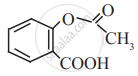
Identify the functional group in the following molecule:
Paracetamol

Give two differences between the Disinfectant and antiseptic.
Name two drugs which reduce body pain.
Explain with an example of Antiseptics.
Explain with an example Disinfectant.
Explain with an example of Cationic detergents.
Explain with an example of Anionic detergents.
Explain with an example of Nonionic detergents.
Identify the functional group in the following molecule:
Penicillin
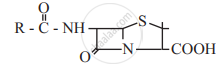
What is meant by broad-spectrum antibiotic and narrow-spectrum antibiotics?
Answer in one sentence.
Name the class of drug often called as a painkiller.
Answer in one sentence.
Draw the structure of chloroxylenol.
Answer in one sentence.
Draw the structure of salvarsan.
Answer in one sentence.
What is the tincture of iodine?
Write two examples of the following:
- Analgesics
- Antiseptics
- Antibiotics
- Disinfectant
Which of the following is an analgesic?
Butylated hydroxy anisole is a/an ______.
Commonly used antiseptic ‘Dettol’ is a mixture of ______.
Which of the following is a hypnotic drug?
Which of the following is a bactericidal antibiotic?
Which of the following is used as antiseptic?
A chemical that interacts with biomolecules and produces a biological response is called ______.
