Advertisements
Advertisements
Question
Match the following
| A | B | ||
| (i) | Core | (a) | Earth’s surface |
| (ii) | Minerals | (b) | Used for roads and buildings |
| (iii) | Rocks | (c) | Made of silicon and alumina |
| (iv) | Clay | (d) | Has definite chemical composition |
| (v) | Sial | (e) | Innermost layer |
| (f) | Changes into slate | ||
| (g) | Process of transformation of the rock | ||
Match the Columns
Advertisements
Solution
| A | B | ||
| (i) | Core | (e) | Innermost layer |
| (ii) | Minerals | (d) | Has definite chemical composition |
| (iii) | Rocks | (b) | Used for roads and buildings |
| (iv) | Clay | (f) | Changes into slate |
| (v) | Sial | (c) | Made of silicon and alumina |
| (a) | Earth’s surface | ||
| (g) | Process of transformation of the rock | ||
shaalaa.com
Rocks and Minerals
Is there an error in this question or solution?
RELATED QUESTIONS
What are the uses of rocks?
What are metamorphic rocks?
Tick the correct answer
The rock which is made up of molten magma is
Tick the correct answer
Gold, petroleum and coal are examples of
Tick the correct answer
The thinnest layer of the earth is
What are minerals?
What is the mineral most commonly used in the following object?
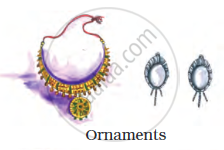
What is the mineral most commonly used in the following object?
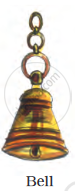
What is the mineral most commonly used in the following object?
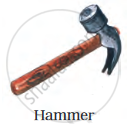
Which one of the following is not a single element mineral?
