Advertisements
Advertisements
Question
Match the articles given in column I with the articles of column II.
| COLUMN I | COLUMN II | ||
| (a) | Sweater | (i) | Cotton |
| (b) | Cotton bolls | (ii) | Wool |
| (c) | Dhoti | (iii) | Ginning |
| (d) | Gunny bags | (iv) | Jute |
Advertisements
Solution
| COLUMN I | COLUMN II | ||
| (a) | Sweater | (ii) | Wool |
| (b) | Cotton bolls | (iii) | Ginning |
| (c) | Dhoti | (i) | Wool |
| (d) | Gunny bags | (iv) | Jute |
APPEARS IN
RELATED QUESTIONS
Very Short Answer Type Questions:
Name two varieties of cloth materials which are commonly used.
Very Short Answer Type Questions:
Name some fabrics in your surroundings.
______ is an example of polyester fabric.
What kind of fabric is suitable to dress-up and play in the summer?
Silkworms secrete fibre made of ______.
Write a caption for the figures given in Figure.
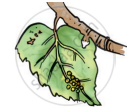
Write a caption for the figures given in Figure.
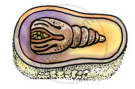
Some term related to fabric is jumbled up and given below. Write it in its correct form.
sinnping
Some term related to fabric is jumbled up and given below. Write it in its correct form.
bisref
In ancient times stitching was not known. People used to simply drape the fabrics around different parts of their body. Even today a number of unstitched fabrics are used by both men and women. Can you give four such examples of clothes?
