Advertisements
Advertisements
Question
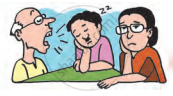
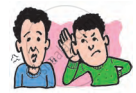
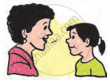
Look at the speaker in each picture. Say whether each one is a good speaker. Give reasons for your answer.
 |
 |
 |
 |
 |
Advertisements
Solution
| Remark | Observation | |
|
Bad speaker | Face displays lack of confidence. It seems to be speaking without planning. Points are not arranged well. |
|
Bad Speaker | Speaking very loudly to a disinterested audience. |
|
Good speaker | Extremely well organized with eye contact with the audience. |
|
Bad Speaker | Talking very softly without eye contact, thus making the listener disinterested. |
|
Good speaker | Looking at the person he is talking to and maintaining eye contact. |
RELATED QUESTIONS
Big male elephants throw logs at electric fences because
Fill in the gap, choosing a word from the bracket to make an appropriate comparison.
(tall / quiet / humble / merry / busy / slippery / fast / sly / slow / big)
as ______ as a bee
There are many popular lines like:-
- ‘Life is a game - play it well’.
- ‘Life is a journey - keep going ahead’.
Discuss and write down a few such metaphorical lines about ‘life’. You can make them up yourselves.
- ____________________________
- ____________________________
- ____________________________
- ____________________________
- ____________________________
Read the following pieces from the story and suggest a title for each as shown in the 1st one.
| From | Up to | Title | |
| 1. | It was a hot afternoon ______ | ______ said the aunt weakly. | ‘Children Pester their Aunt’ |
| 2. | The smaller girl created a diversion ______ | ______ likely to lose his bet. | ______ |
| 3. | In a low confidential voice ______ | ______ it was so stupid,” said Cyril. | ______ |
| 4. | She (Bertha) did all that she was told ______ | ______ must be an extra good child. | ______ |
| 5. | The storyteller paused to let ______ | ______ popular tunes of the day. | ______ |
| 6. | Bertha was trembling very much ______ | ______ the three medals for goodness ______ | ______ |
What mistake did the man in the moon make?
Narrate the story based on the story map
Name the character or speaker.
“Learn well, live well!”
Who guessed the location of the real necklace?
Why did Bala go to Chennai with his father?
Write the related words as shown in the example: