Advertisements
Advertisements
Question
Identify the market form from the following.
Perfect knowledge
Advertisements
Solution
Perfect competition
RELATED QUESTIONS
In which type of market price discrimination is practiced? Explain with an example.
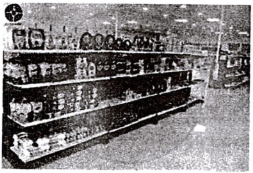
The image above shows a departmental store of a market structure.
- Identify the form of market as observed from the above image.
- Discuss the features of this market form with respect to:
- Type of product
- Entry and exit of firms
- Selling cost
Explain three features of Perfect competitive market.
Following is not the feature of perfect competition:
To which market is product differentiation relevant?
Identify the market form of the following:
Motor car market in India.
State the market form of the following commodity.
Shampoos
State the market form of the following commodity.
Fighter Aircrafts
Identify the market form for the item given below:
A single seller
Identify the market form for the item given below:
A single buyer
Give an example of monopoly.
Discuss any four differences between monopoly and monopolistic competition.
Which type of market structure is the following? Give reason.
Jeans
Which type of market structure is the following? Give reason.
Lipstick
With the help of an example explain the meaning of price discrimination.
To which market form are homogeneous products relevant?
What is meant by the term ‘price taker’?
Name the characteristic which makes monopolistic competition different from perfect competition.
