Advertisements
Advertisements
Question
- How many different shapes can you make by joining two squares? Draw them on the squared sheet given below. How long is the boundary of each shape?
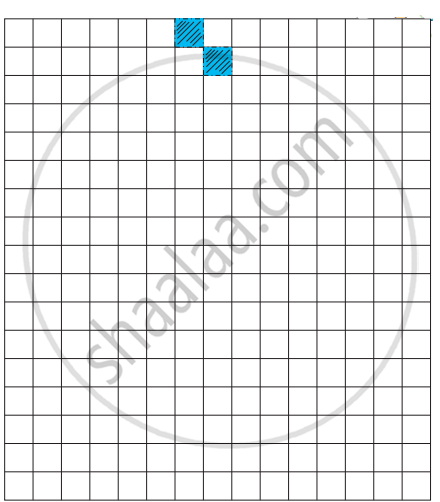
- Try this activity with three squares also.
Advertisements
Solution
- The shapes made by joining two squares are shown here :
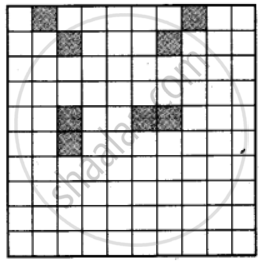 There are four types of shapes that can be made by joining two squares.
 - Following types of shapes can be made by joining three squares.
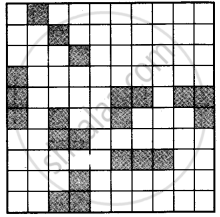
Seven types of shapes can be made by joining three squares.
APPEARS IN
RELATED QUESTIONS
How much wire did Rahmat give to Ganpat?
Here are pictures of some more fields. Find out which one has the longest boundary?
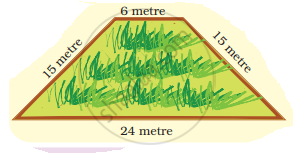
Boundary = ______ metre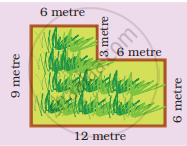
Boundary = ______ metre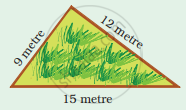
Boundary = ______ metre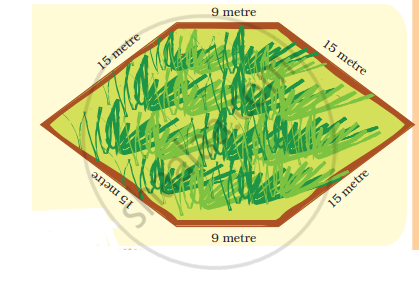
Boundary = ______ metre
Chandu’s father is called the ‘young old man’ in his village. At 70 years of age, he is fully fit. Do you know his secret? He goes for a walk around the field every morning. Everyday he takes four rounds of Chandu’s field.
What is the total distance he covers?
4 × ______ = ______ m = ______ km
Ganpat’s wife works in a tailor’s shop. She has to fix lace around a table cloth.
She bought a 100 metre roll of lace.
Look at the picture of the table cloth and tell how much lace is used for one table cloth.
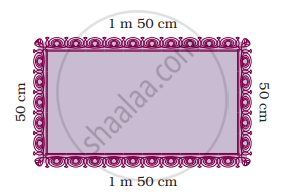
How much lace will be used in 3 such table cloths?
Find out the length of the boundary of these shapes. (Hint: You can use a thread)

Now count the squares to find out :
- How many squares are there in each shape?
- Which shape covers the least number of squares?
- Which shape covers the most number of squares?
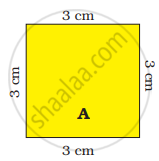
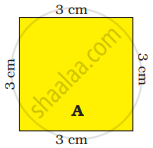
A square has a boundary of 12 cm.
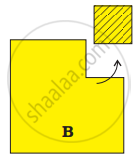
- From the corner of this square, a small square of side 1 cm is cut off. Will the boundary of B be less or more? Find its length.
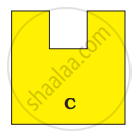
- If you cut a 1 cm square to get shape C, what will be the length of the boundary of C?
 |
 |
 |
 |
| Square | New shape |
A hockey held is 91 metres 40 cm long and 55 metres wide. How long is the boundary of the held?
- How many small squares of size 1 cm are there in this big green square?
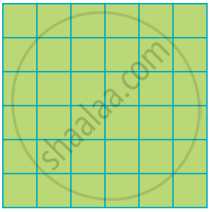
- Can you think of a faster way to know the total number of small squares without counting each.
Raghavan has a piece of land.
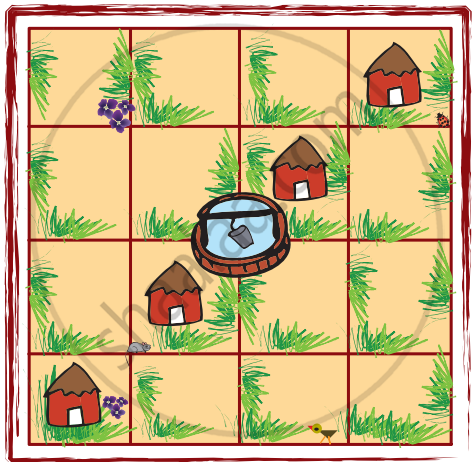
There are 4 houses on his land and in the middle there is a well. He wants to divide this land equally among his four children. Each should get one house and be able to use the well without entering the, other’s land. Can you help him divide the land?
Give different colours to each one’s share.