Advertisements
Advertisements
Question
How are kidney stones formed?
Advertisements
Solution
Kidney stones are formed when crystal-forming substances such as calcium oxalate, calcium phosphate, and uric acid are more than the fluid in the urine. When these chemicals start sticking together, they form crystals, commonly called kidney stones. They may be formed and cause severe pain.
APPEARS IN
RELATED QUESTIONS
Answer the following question.
John has two options as a treatment for his renal problem: Dialysis or kidney transplants. Which option should he choose? Why?
Complete the diagram/chart with correct labels/ information. Write the conceptual details regarding it.
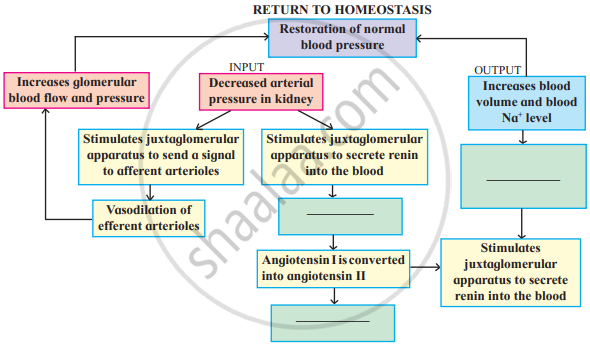
What is the effect of aldosterone on kidneys and where is it produced?
Bright's disease is characterized by the following symptoms EXCEPT ______
Haemodialysis is done in the condition when the person is suffering from ______.
What is the procedure advised for the correction of extreme renal failure? Give a brief account of it.
Explain, why a haemodialysing unit called artificial kidney?
Which of the following conditions does not lead to acute renal failure?
Which statement is correct regarding the haemodialysis procedure?
Which of the following statement is true regarding kidney or renal transplantation?
