Advertisements
Advertisements
Question
Fill in the blank:
The first code of laws was made by ___________.
Advertisements
Solution
The first code of laws was made by Hammurabi.
APPEARS IN
RELATED QUESTIONS
Answer the following question?
Describe the Great Bath. Where has it been found? What was it used for?
Answer the following question?
What were the probable causes which could have brought about an abrupt end to the Indus Valley Civilisation?
State whether the following is true or false.
The Harappans decorated their pottery with various designs.
Give one example to prove that the Indus Valley bronzesmiths were skilled craftspeople.
This picture on the right-hand side shows a well-planned ancient city located on the banks of a river.
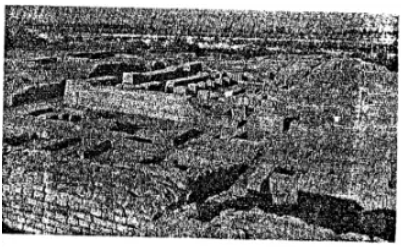
- Identify the civilization from the ruins in the picture.
- When and by whom were these ruins discovered?
- These ruins are an important source of information about the
(a) town planning and
(b) drainage system of this period. Explain.
Answer the following question in a few sentences.
What is Egyptian writing known as?
Answer the following question briefly:
Name the four River Valley Civilisations. Mention their common features.
Text Book Keyword
Cleopatra
Match the Following
| Column A | Column B |
| 1. Ziggurats | (a) one of the seven wonders of the ancient world |
| 2. Hanging Gardens of Babylon | (b) temple-tower |
| 3. Cuneiform | (c) sharp reed pen |
| 4. Stylus | (d) code of law |
| 5. Hammurabi | (e) Mesopotamian script |
Write a short note on the following:
Family life
Write a short note on the following:
Script
State whether the following is true or false.
The cuneiform script was written from left to right.
Fill in the blank.
The ______ was the head of the family.
Answer the following question briefly:
Describe the religion of people in ancient Egypt.
Describe ornaments of the Indus Valley people.
Write a short note on ‘Great Bath’?
What do you know about the religious beliefs and practices of the Harappans?
Choose the correct answer:
__________ became the state religion of China.
Describe the religious beliefs of people in ancient Chinese civilization.
Discuss the main feature of Confucianism?
