Advertisements
Advertisements
Question
Figure below shows a metal rod AB placed on an insulating stand.
In figure (a) a negatively charged ebonite rod C is touched with the metal rod AB, while in figure (b), the negatively charged ebonite rod C is held near the rod AB. State the kind of charges at the ends A and B of the rod, in each case.
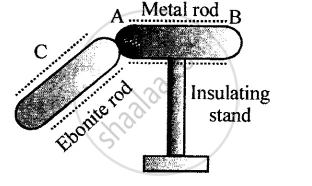
Answer in Brief
Advertisements
Solution
Explanation of Charges:
Case (a): The negatively charged ebonite rod C touches the metal rod AB
- When the ebonite rod C (negatively charged) touches the metal rod AB, electrons are transferred from the ebonite rod to the metal rod because metals are good conductors.
- Charges at the ends:
- End A: Negatively charged (electrons transferred from the ebonite rod).
- End B: Negatively charged (charge spreads evenly across the metal rod).
Case (b): The negatively charged ebonite rod C is held near the rod AB (without touching it)
- In this case, the induction process occurs:
- The negatively charged ebonite rod repels the free electrons in the metal rod AB, causing them to move to the far end (B).
- The end near the ebonite rod (A) becomes positively charged due to the deficiency of electrons.
- The far end (B) becomes negatively charged due to the accumulation of electrons.
shaalaa.com
Is there an error in this question or solution?
