Advertisements
Advertisements
Questions
Explain the difference between conventional and non-conventional sources of energy.
State two differences between conventional and non-conventional sources of energy.
Distinguish between the following.
Coal and Natural gas as sources of energy.
Advertisements
Solution 1
| Sr. No. | Conventional sources of energy | Non-conventional sources of energy |
| i. | Conventional sources of energy are the sources that are commonly in use since a long time. | Non-conventional sources of energy refer to the sources that are identified a few decades ago. |
| ii. | Conventional sources of energy are limited and exhaustible. | Non-conventional sources of energy are abundant and inexhaustible. |
| iii. | They cause pollution. | They cause little or no pollution. |
| iv. | Fuels produced from conventional sources are comparatively expensive. | Fuels produced from non-conventional sources are comparatively cheaper. |
| v. | Conventional sources do not produce green energy. | Non-conventional sources produce green energy. |
| vi. | They are primarily used for industrial and commercial purposes. | They are mainly used for domestic purposes. |
| vii. | Example: fossil fuels such as coal, natural gas, etc. | Example: wind energy, solar energy, etc. |
Solution 2
| Sr. No. | Conventional sources of energy | Non-Conventional sources of energy |
| i. | These are those sources which have been in use from ages. | These sources have generally been identified in the recent past. |
| ii. | These are non-renewable sources of energy. | These are renewable sources of energy. |
| iii. | These will last long, just for 100-200 years. | These are going to last forever. |
| iv. | These cause air and water pollution. | These do not cause any pollution. |
| v. | These are very expensive to maintain, store, and transmit, e.g., coal, mineral oil, natural gas, atomic power, and water. | These are less expensive or cheap due to local used easy to be maintained e.g. solar energy, tidal energy, wind energy, geothermal energy |
Notes
Students should refer to the answer according to their questions.
APPEARS IN
RELATED QUESTIONS
Flowing water can rotate a turbine. Which type of energy is used up by the turbine?
How has the traditional use of energy of flowing water been modified for our convenience?
Describe the working of a hydrogen bomb.
Which of the two is a cleaner fuel: hydrogen of CNG? Why?
Describe how hydro-energy can be converted into electrical energy.
Write any two limitations of hydro-energy.
Give scientific reasons:
It is possible to produce energy from mW to MW using solar photovoltaic cells.
Give your opinion about whether hydroelectric plants are environment friendly or not?
Find an odd one out.
Draw the flowchart showing generation of electrical energy through hydroelectric power plant.
Observe the given diagram and answer the questions.
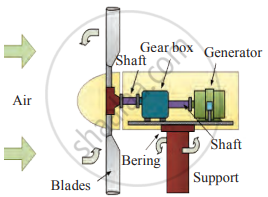
- Which type of energy is generated?
- This power station depends on which factors?
- Is it environment friendly?
Complete the following flow chart.

In a hydropower plant:
Where are the Hydel power stations located in Tamil Nadu?
In a hydro power plant
In a hydroelectric power plant more electrical power can be generated if water falls from a greater height because
