Advertisements
Advertisements
Question
Draw a neat diagram of a flower showing its various parts. In this diagram mark stem, receptacle, sepals, petals, stamen and carpel.
Advertisements
Solution

APPEARS IN
RELATED QUESTIONS

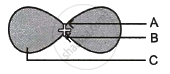
(i) Name the part marked 'A' in the diagram.
(ii) How dose 'A' reachese part 'B'?
(iii) State the importance of the part 'C'.
(iv) What happens to the part marked 'D' after fertilisation is over?
State significance of pollination.
"The chromosomal number of the sexually producing parents and their offspring is the same." Justify this statement.
How is the process of pollination different from fertilization?
Draw a neat sketch of the stamen of a flower. Mark in it filament and anther.
Explain the term 'fertilisation'.
What is seed?
Which of the following statements are true for sexual reproduction in flowering plants?
(i) it requires two types of gametes
(ii) fertilisation is a compulsory event
(iii) it always results in the formation of zygote
(iv) offsprings formed are clones
(a) (i) and (iv)
(b) (i), (ii) and (iv)
(c) (i), (ii) and (iii)
(d) (ii), (iii) and (iv)
Fill in the blanks:
A carpel consists of ________ , ________ and ________.
Mention the function of Flower.
Draw a labelled diagram of a bisexual flower.
You have to perform the experiment, "To identify the different parts of an embryo of a gram seed." Describe the procedure that you would follow.
Explain the process of fertilisation in flowers.
List any two differences between pollination and fertilization.
Answer the following question.
List two agents of pollination?
Find the odd one out:
Pineapple fruit develops from ______.
Trace the path a male gamete takes to fertilise a female gamete after being released from the penis.
What are the agents for pollination?
Given below is a diagram of a germinating seed. Label the parts that:
- gives rise to future shoot.
- gives rise to future root system.
- stores food.