Advertisements
Advertisements
Question
Discuss in Class
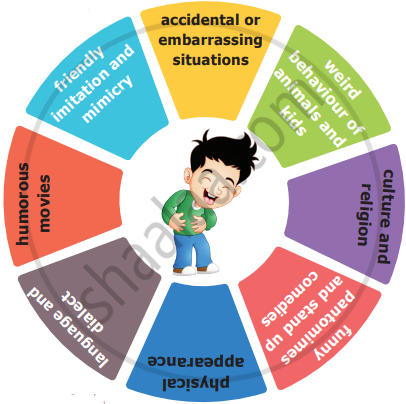
Read the following and have a discussion on which of these are fair and ethical to laugh at and which are not. Why?
Advertisements
Solution
- Accidental or embarrassing situations:
It is not fair and ethical to laugh at them. Because they involve physical and mention aspects of a person. They may be beyond his control at the moment. - Weird behaviour of animals and kids:
We can laugh at them. Because we don’t harm them physically or mentally. - Culture and religion:
It is not fair and ethical to laugh at other’s cultural values and religious beliefs. We must respect them. We must apprecidate diversity for unity. - Funny pantomimes and stand up comedies:
We can laugh at them. They create fun. We don’t hurt them mentally by simply laughing. - Physical appearance:
It is not fair and ethical to laugh at the strange or abnormal physical appearance of a person. We must empathize and not laugh. We harm mentally by laughing at physical appearance. - Language and dialect:
It is not fair to laugh at the way a language or dialect is spoken. It is an identity. There is nothing to laugh at. - Humourous movies:
We can laugh watching humourous movies. There are funny dialogues or situations that create laughter. This kind of laughter is harmless. - Friendly imitation and mimicry:
We can laugh at them only if we ensure that it does not hurt one’s sentiments or beliefs.
APPEARS IN
RELATED QUESTIONS
The owlet was______.
The cage was shifted to the ______.
If the little animals become homeless what will happen?
Lilly was on a trip to the beach with her friends. Some of her friends carelessly threw plastic bags on the road after eating their snacks. She wants to convince them that what they were doing was not correct and they should be good citizens.
Discuss in your group. What could Lilly say? Role play the conversation with one person being Lilly and the other a friend.
Look at the pictures. What do their expressions tell you? Fill in the blanks with the item that tastes the same. One example is given for each.
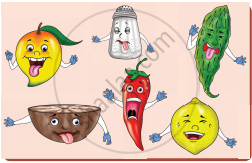
- Sweet: sugarcane ______
- Sour: lime ______
- Bitter: bitter gourd ______
- Salty: salt ______
- Astringent: betel nut ______
- Pungent: ginger ______
Which parts of a plant are collected as spices?
Look at the pictures and read the given information.
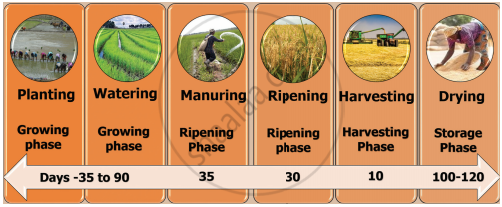
Look at the table carefully. Then complete the points below.
- The paddy plants are given manure is the ______ after ______.
- The plants take ______days to grow before ripening.
- It takes 10 days to______ the rice.
- The rice grains have to be ______ and then stored.
- We ______ the grain for ______ days before boiling.
Read the given lines and answer the questions.
For the past two weeks he had been teaching her to ride.
- Who was teaching whom?
- What was he teaching?
Identify the character/speaker.
“I want to see kutti oppu.”
Make a fact file on how do we use these resources in our day-to-day life.
- Solar energy
- Wind energy
- Hydro energy
