Advertisements
Advertisements
Question
Differentiate the following.
Diphyodont and Heterodont
Distinguish Between
Advertisements
Solution
| Diphyodont | Heterodont |
| In human beings two sets of teeth (Diphyodont) are developed in their life time. | Permanent teeth are of four types (Heterodont). |
shaalaa.com
Is there an error in this question or solution?
APPEARS IN
RELATED QUESTIONS
Name the different types of teeth.
Say true or false.
Brush your teeth once a day.
Differentiate the following.
Incisors and Canines
Number of teeth present in each jaw is ______.
The crown of the tooth is covered by the hardest substance of the body called the ____________.
What is milk teeth?
Name the four types of the permanent teeth.
Teeth are rooted in separate ______ in between the ______.
Label the below given Figure as directed below in (i) to (iv) and give the name of each type of teeth.
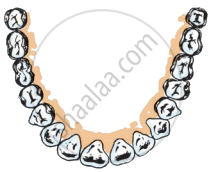
- The cutting and biting teeth as ‘A’
- The piercing and tearing teeth as ‘B’
- The grinding and chewing teeth as ‘C’
- The grinding teeth are present only in adults as ‘D’
Open your mouth, look into a mirror and try to count the different types of teeth in your mouth. Compare them with Figure on page 13 of your NCERT textbook.
Record your observations in the table below:
| Type of teeth | Number of teeth | |
| In my mouth | In the figure | |
| Incisors | ||
| Canines | ||
| Premolars | ||
| Molars | ||
- Did you observe any difference in the number of teeth? If yes, could you identify which type of teeth showed the difference?
- Compare the number and type of teeth in an adult (say your parents or cousins who have reached the age of 25-30 or more). Note your observation.
