Advertisements
Advertisements
Questions
Convectional rainfall is also called 4'0 clock rain.
Give a geographical reason for the following:
Convectional rainfall is called 4 o'clock rainfall.
Give Reasons
Advertisements
Solution
- In the equatorial regions, convectional rainfall is received almost daily in the afternoon.
- It generally happens regularly at 4 p.m. throughout the year.
- For this reason it is called 4’o clock rainfall.
- This type of rain is common in the hot and wet tropical rain forests of Central Africa, Amazon basin of South America and the islands of South east Asia.
- Continuous heating of the earth in the day causes hot convectional currents to raise. Water keeps on evaporating and rising up.
- On reaching the upper layers of the atmosphere they cool, condense and form cumulo¬nimbus clouds.
- In the late afternoon the clouds burst into a heavy downpour often accompanied by thunder and lightning.
- It usually occurs at about 4 p.m, so convectional rain is called 4 o’clock rain and occurs daily in the equatorial regions.
shaalaa.com
Rainfall and It's Types
Is there an error in this question or solution?
RELATED QUESTIONS
Look at the following picture and identify the correct rainfall type.

Look at the figures above and answer the following questions:

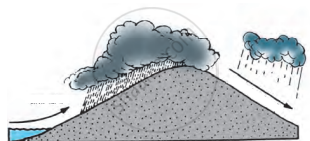

- In fig B, on which side of the mountain is it raining more?
- Shade the rain shadow region in fig B and name it.
- What is the difference between A and C?
- Stormy winds and floods are associated with which rainfall type?
- What type of rainfall occurs in Singapore?
Identify the odd man out:
Which type of rainfall occurs in most of the world? Why?
Write short note on heat.
Write a short note on the orographic rainfall.
Explain Convectional Rainfall.
______ is a major component of the water cycle.
There is a close relationship between ______ and rainfall distribution.
Look at the following picture and identify the correct rainfall type.

