Advertisements
Advertisements
Question
Collect or draw different pictures of birds from your surroundings and write about them. Make a chart with some information about each.
Advertisements
Solution
| 1) |
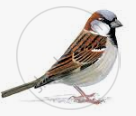
Sparrow |
The House Sparrow is commonly found around human settlements and less often in the forests. It is a small brown-colored bird with black streaks on its back. The males and females differ in colour. The male is dark brown, with a black bib, grey chest, and white cheeks, whereas the female is light brown throughout its body, with no black bib, crown, or white cheeks. It is a social species found in groups of eight to ten, chirping and chattering to communicate. It feeds mostly on seeds, but in the breeding season, the adult bird feeds its young with insects. In recent years, the population has been declining in most cities due to excessive construction and global warming. |
| 2) |
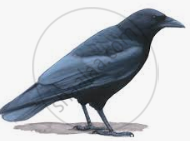
Jungle Crow |
The Indian Jungle Crow is a glossy, black crow with a heavy black bill. Its feathers have a purple gloss throughout, its tail is rounded, and its legs and feet are stout. It's call sounds similar to the house crow’s but is harsher. It may soften its food with water, and has been observed to eat sand after feeding on a carcass. It has varied types of cawing. Despite its name, it is commonly found around human settlements as well. It can be easily distinguished from the house crow, as the house crow has a grey neck. |
| 3) |
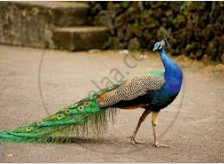
Peacock |
The Indian peafowl is celebrated in Indian and Greek mythology and is the national bird of India. They are found in the Indian subcontinent. The male, known as the peacock, is basically blue with a fan-like formation of feathers and is best known for the long train of elongated feathers that bear colourful eyespots. It is a beautiful, attractive bird. The female, called a peahen, lacks the train and has a greenish lower neck and dull brown plumage. The Indian peafowl lives mainly on the ground in open forests or on cultivated land. They feed on berries, grains, snakes, lizards, and small rodents. Their call is loud and distinct. |