Advertisements
Advertisements
Question
Choose the correct answer:
Both the central and the state governments can make laws on the subjects in the__________.
Options
Union List
State List
Concurrent List
Advertisements
Solution
Both the central and the state governments can make laws on the subjects in the Concurrent List.
RELATED QUESTIONS
Choose the correct answer:
The President can nominate________members from the Anglo-Indian community to the Lok Sabha.
Answer the following question briefly:
In the context of the Parliamentary form of government, answer the following question:
What are the main features of a parliamentary form of government?
Answer the following question briefly:
Give an account of the Lok Sabha with reference to its term.
Answer the following question briefly:
Give an account of the Rajya Sabha with reference to its composition.
With reference to the functions of the Parliament, explain the following:
Law-making functions
This is the picture of an important government building in India.

Identify the building.
This is the picture of an important government building in India.
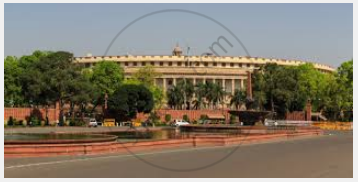
Which branch of the government functions in this building?
Until 1950, the building in the picture was known as ‘Viceroy’s House’, and served as die residence of the Governor General of India.

Mention two powers held by this person with reference to the following:
Judicial Power
Fill in the blank:
The maximum strength of the members of Lok Sabha is _____.
Answer the following question:
How are the members to the Lok Sabha elected?
