Advertisements
Advertisements
Question
Answer the following questions.
The old farmer is a kind person. What evidence of his kindness do you find in the first two paragraphs
Advertisements
Solution
In the first paragraph, it is written that the old farmer treated the dog like his own child. He will feed the dog small pieces of fish with their own chopsticks and offer boiled rice to him as much as he wanted. The second paragraph says that to provide food to the birds, the old farmer will often turn up the surface of the ground.
Both these instances proved that the old man was a kind person.
RELATED QUESTIONS
Answer of these question in two or three paragraphs (100–150 words).
Why did Margie hate school? Why did she think the old kind of school must have been
fun?
Find the sentences in the lesson which have the adverbs given in the box below.
Awfully, sorrowfully, completely, loftily, carefully, differently, quickly, nonchalantly
Thinking about the Poem
How does the woodpecker get her food?
Look at these words:
...peace comes dropping slow
Dropping from the veils of the morning to where the cricket sings
What do these words mean to you? What do you think “comes dropping slow...from the veils of the morning”? What does “to where the cricket sings” mean?
Read the following statement and imagine you are Jack.
“I can’t afford to, after what Jack’s done to his teeth.” What is it, you think, you can not afford to do and why? Write a diary entry of not less than 125 words.
In groups of six, work on one of the mysteries given below by surfing the net and through other sources. Create a power point presentation/a photo essay.
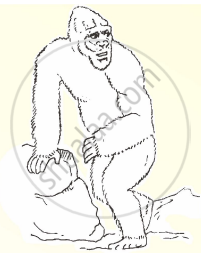
- Yeti, the abominable snowman
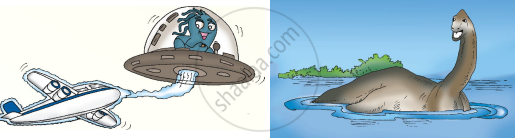
- Loch Ness Monster
- UFOs (Unidentified Flying Objects)
- Lost city of Atlantis
- Crop circles
- Nazca lines
The blocks were all lined up for those who would use them
The hundred-yard dash and the race to be run
These were nine resolved athletes in back of the starting line
Poised for the sound of the gun.
The signal was given, the pistol exploded
And so did the runners all charging ahead
But the smallest among them,he stumbled and staggered
And fell to the asphalt instead.
He gave out a cry in frustration and anguish
His dreams ands his efforts all dashed in the dirt
But as sure I'm standing here telling this story
The same goes for what next occurred.
Read the lines given above and answer the following question:
Explain with reference to context.
Of the seven hundred villages dotting the map of India, in which the majority of India’s five hundred million live, flourish and die, Kritam was probably the tiniest, indicated on the district survey map by a microscopic dot, the map being meant more for the revenue official out to collect tax than for the guidance of the motorist, who in any case could not hope to reach it since it sprawled far from the highway at the end of a rough track furrowed up by the iron-hooped wheels of bullock carts. But its size did not prevent its giving itself the grandiose name Kritam, which meant in Tamil coronet or crown on the brow of the subcontinent. The village consisted of fewer than thirty houses, only one of them built from brick and cement and painted a brilliant yellow and blue all over with
gorgeous carvings of gods and gargoyles on its balustrade, it was known as the Big House. The other houses, distributed in four streets, were generally of bamboo thatch, straw, mud and other unspecified material. Muni’s was the last house in the fourth street, beyond which stretched the fields. In his prosperous days Muni had owned a flock of sheep and goats and sallied forth every morning driving the flock to the highway a couple of miles away.
Read the extract given below and answer the question that follow.
How many houses were there in the village?
Mr. Oliver, an Anglo-Indian teacher, was returning to his school late one night on the outskirts of the hill station of Shimla. The school was conducted on English public school lines and the boys – most of them from well-to-do Indian families – wore blazers, caps and ties. “Life” magazine, in a feature on India, had once called this school the Eton of the East.
Mr. Oliver had been teaching in this school for several years. He’s no longer there. The Shimla Bazaar, with its cinemas and restaurants, was about two miles from the school; and Mr. Oliver, a bachelor, usually strolled into the town in the evening returning after dark, when he would take short cut through a pine forest.
Read the extract given below and answer the question that follow.
Which route did Mr Oliver take on his way back?
How, according to Portia, can the Duke of Saxony’s nephew be made to choose the wrong casket? What do these suitors ultimately decide? Why?
What did Mr Nath thought Nishad had come to his place the second time for?
Sketch the character of Ray in about 80 words. What qualities of Ray do you admire most?
What is one thing that dreams can never tell?
Why and when did Dad say the following?
Funny joke
Answer the question.
What does he imagine about
where teachers live?
How do you define or describe a desert? Name some common desert animals. How do they survive?
Multiple Choice Question:
When do strange questions strike the poet?
Add im- or in- to each of the following words and use them in place of the italicised words in the sentences given below.
| patient, proper, possible, sensitive, competent |
"Don’t lose patience. Your letter will come one day," the postman told me.
Encircle the correct article.
(A/An/The) one beside (a/an/the) banana
In the poem, We are the Music Makers, what are the 'sea-breakers'?
