Advertisements
Advertisements
Question
Answer the following question briefly:
Briefly explain the negative aspects of Shah Jahan’s reign that eventually led to the decline of the Mughal empire.
Advertisements
Solution
The policy of religious tolerance and friendship with the Rajputs was continued by Shah Jahan. Behind the glamour and the glitter of Shah Jahan’s reign, however, lurked some disturbing shadows.
- Shah Jahan’s military expeditions to Central Asia and Kandahar and the extravagant building projects drained the royal treasury.
- To improve the country’s financial resources, heavier taxes were imposed on the peasantry.
- According to Bernier, the French traveller, many villages were mined and left desolate. This setback to agriculture became a major cause of the decline of the Mughal empire.
- The failure of military campaigns during this period was an indication of the decline of the military might of the Mughals.
- The administrative machinery had grown in size but corruption had crept in.
RELATED QUESTIONS
Answer the following questions briefly:
Name two travellers who visited Jahangir’s court.
Shah Jahan built the magnificent ______ in the memory of his wife, Mumtaz Mahal.
Jahangir is said to have installed a chain of justice.
The Jama Masjid is said to be the most perfect of Jahangir’s buildings.
Answer the following question briefly:
Jahangir fulfilled Akbar’s unrealized imperial dreams by conquering Mewar. Explain.
Shah Jahan’s reign was an age of splendour and cultural brilliance. In this context, discuss:
Taj Mahal
Shah Jahan’s reign was an age of splendour and cultural brilliance. In this context, discuss: Red Fort
This is a picture of a 17th century-CE monument, built-in red sandstone by a Mughal emperor.
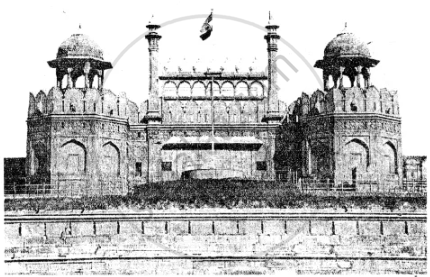
Identify the monument.
This is a picture of a 17th century-CE monument, built-in red sandstone by a Mughal emperor.
Who built this monument?
This is a picture of a 17th century-CE monument, built-in red sandstone by a Mughal emperor.
Name two important buildings inside this monument.
