Advertisements
Advertisements
Question
What are our duties towards preservation of any historical site?
Advertisements
Solution
Historical sites are symbols of the past and they represent the culture and tradition of a place. They let us take a peek into the way of life in earlier times, the significant events of an era and an understanding of history. The present generation is given the task of making sure that these evidences of cultural heritage are safely passed on to the next generations. Hence, we must protect the rich heritage. We must not let rapid urbanisation affect them and must also not litter or damage such sites. We must maintain them and take an active part in their preservation.
APPEARS IN
RELATED QUESTIONS
Pair up with your partner and answer the following question.
Where have you travelled?
Pair up with your partner and answer the following question.
Have you heard about the wonders of the world?
Pair up with your partner and answer the following question.
What does UNESCO stand for?
Pair up with your partner and answer the following question.
What is meant by Heritage?
Heritage Sites - Rank these with your partner. Put the best at the top.
Great Barrier Reef
Mount Fuji
Grand Canyon
The Pyramids
Panda Sanctuaries
Machu Picchu
Vatican City
Great Wall of China
With the help of your partner complete the information in the table.
| Tourist spot | Favourite | Why? |
| Park | ||
| Mountain | ||
| Beach | ||
| Sea | ||
| Forest | ||
| Countryside/Rural site |
What do heritage sites in the world include?
What kind of sites are protected and maintained by the International World Heritage Programme?
How many world Heritage sites were there around the world?
What is the role of World Heritage Committees?
What is the tenure of the World Heritage Committee?
What are our duties towards the preservation /conservation of any historical site?
What is the role of World Heritage Sites in developing tourism in any country?
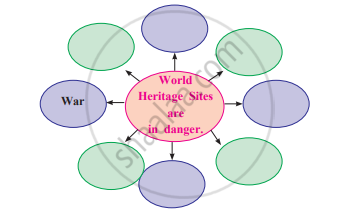
Complete the following by giving reasons why World Heritage Sites are in danger.
Mount Huangshan is situated in____________
The conference based on Human Environment was held at ____________.
The highest number of World Heritage Sites are located in ____________.
The tenure of World Heritage Committee is ____________ years.
Match the pairs to define different roles of the World Heritage Sites.
| A |
B |
|
1. Identify cultural and natural sites |
1. green, local based, stable, and decent. |
|
2. Natural sites Identify sites of |
2. of outstanding universal value across countries. |
|
3. Identify sites that represent |
3. preserve outstanding sites and natural resources |
|
4. UNESCO seeks to |
4. tourism |
|
5. World Heritage Sites should have |
5. an asset for economic development and investment. |
|
6. World Heritage should |
6. protect these sites. |
|
7. World Heritage Site serves as |
7. best examples of the world's cultural and/or natural heritage. |
|
8. World Heritage Site should ensure |
8. special importance for everyone. |
|
9. It should at large develop |
9. relevant development plan policies. |
Complete the following information from the text.
| Tasks | Activities to |
| Preservation of any historical site → (Duties) | |
| Preserving World Heritage sites → (Reasons) | |
| Promoting tourism → (Role) |
Read the points given in column ‘A’ specifying Dos towards the prevention of any historical site. Write Don’ts in column ‘B’ specifying things that should not be done.
| Dos | Don’ts | |
| (i) | Obey rules and regulations. | |
| (ii) | Maintain discipline and order. | |
| (iii) | Maintain cleanliness. | |
| (iv) | Use dustbins and garbage bags. | |
| (v) | Observe silence | |
| (vi) | Maintain environmental safety. | |
| (vii) | Protect our country’s heritage |
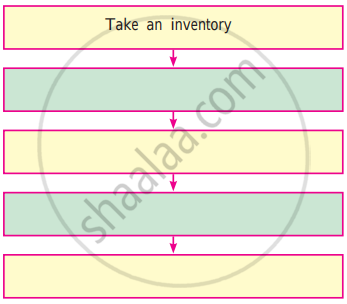
Complete the following flow chart by choosing the option given below to show how any site of any country can become a World Heritage Site.
Options :
- Inclusion of the name of the site from the tentative list to the nomination file.
- The name of the site is inscribed on the World Heritage List after meeting the criteria.
- Inclusion of the name of the site for the nomination in a tentative list after an inventory in-country or State.
- The decision of the World Heritage Committee after review of the nominated file.
- A review of the included file by the advisory bodies.
World Heritage Sites - Make a poster about World Heritage Sites, specifying some details and specialties about each of them.
Write the importance of the years given below, with reference to World Heritage Sites.
| Year | Importance |
| 1959 | ________________________ |
| 1965 | ________________________ |
| 1968 | ________________________ |
| 1972 | ________________________ |
| 2009 | ________________________ |
The place where the conference based on Human Environment was held __________________.
The Role of World Heritage Committee is
We can get more information about World Heritage Sites from it __________________.
Why should we preserve the World Heritage Sites?
Read the following passage and complete the activities:
B1. Complete the given sentences by choosing the correct option: (2)
(i) The ______ on monuments and sites initiated a draft convention to create an international organisation responsible for protecting cultural heritage.
- International Peace Committee
- International Council
- International Health Committee
- World Heritage List
(ii) The famous dam situated in Egypt on River Nile is ______.
- Buzwaa High Dam
- Rizwa High Dam
- Aswan High Dam
- Kalwa High Dam
(iii) The idea of protecting cultural and natural heritage sites around the world began in the early ______ century.
- twentieth
- nineteenth
- eighteenth
- fifteenth
(iv) The project cost an estimated US $ 80 million, $ 40 million which came from ______ different countries.
- 35
- 55
- 25
- 50
|
Although the idea of protecting cultural and natural heritage sites around the world began in the early twentieth century, momentum for its actual creation was not until the 1950s. In 1954, Egypt started plans to build the Aswan High Dam to collect and control water from the Nile River. The initial plan for the dam's construction would have flooded the valley containing the Abu Simbel Temples and scores of ancient Egyptian artefacts. To protect the temples and artefacts, UNESCO launched an international campaign in 1959 that called for the dismantling and movement of the temples to higher ground. The project cost an estimated US $80 million, $40 million of which came from 50 different countries. Because of the project's success, UNESCO and the International Council on Monuments and Sites initiated a draft convention to create an international organisation responsible for protecting cultural heritage. Shortly thereafter in 1965, a White House Conference in the United States called for a "World Heritage Trust" to protect historic and cultural sites but to also protect the world's significant natural and scenic sites. Finally, in 1968, the International Union for Conservation of Nature developed similar goals and presented them at the United Nations Conference on Human Environment in Stockholm, Sweden in 1972. Following the presentation of these goals, the Convention concerning the Protecting of World Cultural and Natural Heritage was adopted by UNESCO's, General Conference on November 16, 1972. |
B2. Complete the following information from the passage: (2)
| Tasks | Reasons |
| (i) UNESCO launched an international campaign in 1959. | |
| (ii) A White House Conference in the United States called for a 'World Heritage Trust'. |
B3. Pick out and write any four adjectives from the passage: (2)
- ______
- ______
- ______
- ______
B4. Do as directed: (2)
(i) UNESCO and International Council on Monuments initiated a draft convention to create an international organisation responsible for protecting cultural heritage.
(Use 'not only ______ but also' in the above sentence.)
(ii) In 1968, the International Union for conservation of nature developed similar goals and presented them at the United Nations Conference on Human Environment is Stockholm, Sweden in 1972.
(Identify whether the above sentence is simple, compound or complex.)
B5. What measures will you adopt for prevention of any historical site? (2)
B1. Read the following passage and do the activities:
- International World Heritage Program is administered by ______.
- UNESCO
- WHO
- WHC
- UN
- World Heritage Sites are significant ______.
- Naturally and culturally
- Naturally and traditionally
- Naturally and literary
- None of these
- Which site played a role in historical Chinese art and literature?
- Aswan High Dam
- Mount Huangshan
- Abu Simbel Temple
- Egyptian artefacts
- UNESCO launched an international campaign in ______.
- 1950
- 1959
- 1958
- 1957
|
A World Heritage Site is a site determined by the United Nations Educational, Scientific and Cultural Organization (UNESCO) to have significant cultural or natural importance to humanity. As such, the sites are protected and maintained by the International World Heritage Programme which is administered by the UNESCO World Heritage Committee, because World Heritage Sites are places that are significant culturally and naturally, they vary in type but include forests, lakes, monuments, buildings and cities. World Heritage Sites can also be a combination of both cultural and natural areas. For example, Mount Huangshan in China is a site with significance to human culture because it played a role in historical Chinese art and literature. The mountain is also significant because of its physical landscape characteristics. HISTORY OF WORLD HERITAGE SITES Although the idea of protecting cultural and natural heritage sites around the world began in the early twentieth century, momentum for its actual creation was not started until the 1950s. In 1954, Egypt started plans to build the Aswan High Dam to collect and control water from the Nile River. The initial plan for the dam's construction would have flooded the valley containing the Abu Simbel Temples and scores of ancient Egyptian artefacts. To protect the temples and artefacts, UNESCO launched an international campaign in 1959 that called for the dismantling and movement of the temples to higher ground. The project cost an estimated US $80 million, $40 million of which came from 50 different countries. |
B2. Briefly describe the international campaign launched by UNESCO in 1959.
B3. Make sentences using the following phrases.
- Play a role
- Scores of
B4. Rewrite the following sentences using 'not only' and 'but also'.
- World Heritage Sites can also be a combination of both cultural and natural areas.
- Egypt started plans to build the Aswan High Dam to collect and control water from the Nile River.
B5. How do you think can an individual conserve and protect a World Heritage Site?
