Advertisements
Advertisements
Question
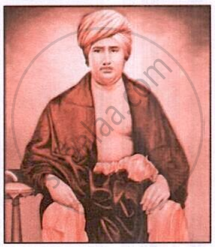
- Identify the person in the given picture. Name the organisation formed by him. State any two beliefs of this organisation with regard to the opposition of social evils.
- Mention his contribution to the spread of education in India.
- State one basic difference between Raja Rammohan Roy and the person in the picture.
Very Long Answer
Advertisements
Solution
- The person in the picture is Swami Dayanand Saraswati, and the organisation he founded in 1875 is the Arya Samaj. With regard to opposing social evils, the organisation firmly believed in rejecting the rigid caste system based on birth and instead advocated that a person's social position should be determined solely by their merit and actions (Karma). Furthermore, the Arya Samaj strongly condemned child marriage and championed the upliftment of women by actively supporting female literacy, equal societal rights, and the practice of widow remarriage.
- Contribution to the Spread of Education:
- DAV Schools and Colleges: After his demise, his followers established a vast network of Dayanand Anglo-Vedic (DAV) institutions across India, which combined modern English scientific education with traditional Vedic values.
- Gurukul System: The Arya Samaj also set up traditional residential academies called Gurukuls (such as Gurukul Kangri near Haridwar) to revive ancient Indian education practices.
- Women’s Education: He was a fierce advocate for equal educational opportunities for girls and opened numerous Kanya Gurukuls (girls’ schools).
- Source of Authority: Raja Rammohan Roy was deeply influenced by Western rationalism, scientific thought, and Christian monotheism, attempting to synthesise Western and Eastern philosophy. In contrast, Swami Dayanand Saraswati rejected Western ideological synthesis and looked exclusively backward to indigenous roots, declaring the ancient Indian Vedas as the infallible and ultimate source of all truth (“Back to the Vedas”).
shaalaa.com
Is there an error in this question or solution?
