Advertisements
Online Mock Tests
Chapters
1: Cell: The structural and functional unit of life
2: Structure of chromosome, cell cycle and cell division
3: Genetics: Some Basic Fundamentals
Unit-2 : Plant Physiology
4: Absorption by roots: The Processes Involved
5: Transpiration
6: Photosynthesis
7: Chemical Coordination in Plants
Unit-3 : Human Anatomy and Physiology
8: The Circulatory System
9: The Excretory System
10: The Nervous System
11: Sense Organs
12: The Endocrine System
13: The Reproductive System
Unit-4 : Human Evolution
14: Human Evolution
Unit-5 : Population
15: Population: The increasing numbers and rising problems
Unit-6 : Pollution
▶ 16: Pollution: A Rising Environmental Problem
![Selina solutions for कन्साइस बायोलॉजी [इंग्रजी] इयत्ता १० आयसीएसई chapter 16 - Pollution: A Rising Environmental Problem - Shaalaa.com](/images/concise-biology-english-class-10-icse_6:930ad8471f2d4b8b8e0d2fbdad788b1f.jpg "Selina solutions for कन्साइस बायोलॉजी [इंग्रजी] इयत्ता १० आयसीएसई chapter 16 - Pollution: A Rising Environmental Problem")
Advertisements
Solutions for Chapter 16: Pollution: A Rising Environmental Problem
Below listed, you can find solutions for Chapter 16 of CISCE Selina for कन्साइस बायोलॉजी [इंग्रजी] इयत्ता १० आयसीएसई.
Selina solutions for कन्साइस बायोलॉजी [इंग्रजी] इयत्ता १० आयसीएसई 16 Pollution: A Rising Environmental Problem Intext Question [Pages 222 - 228]
Progress Check Mention whether the following statements are True (T) or False (F).
Pollution and pollutant are one and the same thing.
True
False
Rubber tyres of motor vehicles contribute to particulate pollution.
True
False
The chief gaseous air pollutants are CO2 and SO2.
True
False
Kitchen garbage and leftovers in food dishes can be used for making manure (compost).
True
False
Brick kilns give out both gaseous and particulate pollutants.
True
False
Name any four ways to control vehicular air pollution.
Name any two small scale industries that can be the source of particulate air pollution.
Give two examples of gaseous air pollutants.
Progress Check Mention whether the following statements are True (T) or False (F).
Liquid kitchen waste alone constitutes the sewage.
True
False
Household detergents are safe and non-contributors to water pollution.
True
False
Industrial wastes mainly consist of chemical pollutants.
True
False
Thermal power plants give out a lot of hot waste water.
True
False
Hot water discharged into water bodies hardly affects the fish and other aquatic life.
True
False
Progress Check Mention whether the following statements are True (T) or False (F).
Soil pollution is largely localised.
True
False
Flyash and metallic ash are examples of urban domestic waste.
True
False
Chemical fertilisers may reach the rivers but do not harm the fish.
True
False
Biomedical waste may consist of both biodegradable and non-biodegradable waste.
True
False
X-rays are a potential source of radiation pollution.
True
False
Unwanted disturbing sound, even if it is music next door, is noise.
True
False
People routinely working in noisy places are not much affected by noise.
True
False
Progress Check Mention whether the following statements are True (T) or False (F).
Diseases like cholera and jaundice are the results of soil pollution.
True
False
CO2 and methane are directly contributing to global warming.
True
False
Erosion of ancient monuments and statues is caused by acid rain which itself is the result of gaseous pollution.
True
False
Use of unleaded petrol and compressed Natural Gas (CNG) in automobiles is one of the methods of abatement of gaseous and particulate air pollution.
True
False
Selina solutions for कन्साइस बायोलॉजी [इंग्रजी] इयत्ता १० आयसीएसई 16 Pollution: A Rising Environmental Problem Review Questions [Pages 229 - 231]
MULTIPLE CHOICE TYPE (Select the most appropriate option in each case)
Which of the following is an example of a green house gas?
Sulphur dioxide
Methane
Oxygen
Nitrogen
The prime source of chlorofluorocarbons is ______.
Domestic sewage
Refrigeration equipment
Industrial effluents
Vehicular emissions
Which of the following gas can cause acid rain?
Sulphur dioxide
Ammonia
Hydrogen
Nitrogen
Which of the following is responsible for causing the ozone hole?
Methane
Carbon dioxide
Aerosols
Sulphur dioxide
Which of the following is non-biodegradable?
Tea leaves
Wood
Animal bones
Nylon
One of the best solutions to get rid of non-biodegradable wastes is ______.
Dumping
Incinerating
Recycling
Composting
An undesirable change in the environment is called as ______.
Pollutant
Population
Pollution
None of these
The greenhouse effect leads to ______.
Thermal pollution
Oil spills
Droughts
Global warming
The energy content of X-rays is usually measured in ______.
Proton
Protium
Photon
None of these
Which of the following is a radioactive pollutant?
Iodine-131
Iodine-113
Iodine-313
Cobalt-16
The following questions are Assertion-Reason based questions. Choose the answer from the options given below.
Assertion (A): Pesticides are the chemical substances used in agriculture to destroy pests.
Reason (R): DDT is an example of a pesticide which was once widely used all over India. Pests are the enemies of crop.
- A is True and R is False.
- A is False and R is True.
- Both A and R are True.
- Both A and R are False.
(1)
(2)
(3)
(4)
Assertion (A): Ozone layer is a sort of sunscreen present high up in the atmosphere which prevents the harmful ultra-violet rays of the sun from harming us.
Reason (R): Ozone is an allotropic form of carbon which is formed in the atmosphere due to the release of chloroflurocarbons.
- A is True and R is False.
- A is False and R is True.
- Both A and R are True.
- Both A and R are False.
(1)
(2)
(3)
(4)
Assertion (A): The greenhouse effect is exacerbated by the presence of nitrogen oxides and sulphur oxides in the atmosphere, intensifying the absorption of heat and contributing to global warming.
Reason (R): Oxides of nitrogen and sulphur, primarily released through industrial activities and combustion processes, amplify the greenhouse effect by enhancing the heat-trapping capacities of the atmosphere, leading to an increase in the average global temperatures.
- A is True and R is False.
- A is False and R is True.
- Both A and R are True.
- Both A and R are False.
(1)
(2)
(3)
(4)
VERY SHORT ANSWER TYPE
Name the following pollutant:
A pollutant which is mainly responsible for causing acid rain.
Name the following pollutants:
Any two chemicals leading to the formation of ozone holes.
Match the items in column I with the closely related ones in column II.
| Column I | Column II | ||
| (i) | Chlorofluorocarbons (CFCs) | (a) | Global warming |
| (ii) | Fly ash | (b) | Biodegradable |
| (iii) | Cow dung | (c) | Nuclear radiation pollutant |
| (iv) | CO2 and methane | (d) | Acid rain |
| (v) | Sulphur dioxide | (e) | Industrial waste |
| (vi) | Iodine-131 | (f) | Ozone depletion |
Fill in the blanks:
Rubber particles and dust raised by running motor vehicles are examples of ______ pollutants.
Too frequent exposure to ______ in a medical diagnostic technique may damage chromosomes.
Thermal power plants give out a lot of ______ waste water.
Sewage is a liquid waste from ______.
Write the full form of DDT.
Write the full form of ODF.
Write the full form of CFCs.
Write the full form of CNG.
Write the full form of LPG.
Give two examples of Biodegradable wastes.
Give two examples of Non-biodegradable wastes.
Give two examples of Particulate pollutants.
Give two examples of Greenhouse gases.
Give two examples of Radioactive pollutants.
SHORT ANSWER TYPE
List two major harmful effects of the following:
Rivers contaminated with sewage.
List two major harmful effects of the following:
Too much gaseous exhausts containing CO2 and SO2.
List two major harmful effects of the following:
Pesticides such as DDT used in agriculture.
List two major harmful effects of the following:
Prolonged noise such as the one produced by crackers.
List the three major constituents of sewage.
What are the common sources of oil spills?
How do oil spills affect sea life?
Mention any two measures to minimise noise pollution.
Briefly mention about 'Swachh Bharat Abhiyan'.
When was 'Swachh Bharat Abhiyan' launched?
Write any two objectives of Swachh Bharat Abhiyan.
DESCRIPTIVE TYPE
Define the following term:
Pollution
Define the following term:
Waste
Define the following term:
Air pollution
Define the following term:
Oil spills
Define the following term:
Pesticides
Define the following term:
Sanitary landfills
Define the following term:
Noise
Distinguish between the following pair:
Sewage and effluents.
Distinguish between the following pair:
Biodegradable and Non-biodegradable waste.
Distinguish between the following pair:
Smoke and smog.
STRUCTURED/APPLICATION/SKILL TYPE
A lot of fish are dying near a sea shore. Describe any two possible causes.
Look at a cartoonist's presentation of a kind of pollution given below.
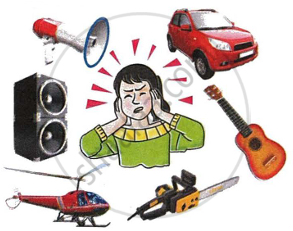 |
- Name the kind of pollution.
- List the sources of pollution.
- Mention any two harmful effects of this pollution.
The following picture depicts a certain phenomenon

- Name the phenomenon and explain it.
- Enlist the sources that are responsible for the above mentioned phenomenon.
- List out the effects of the above phenomenon on humans.
The picture below shows a campaign recently started by the Indian Government.
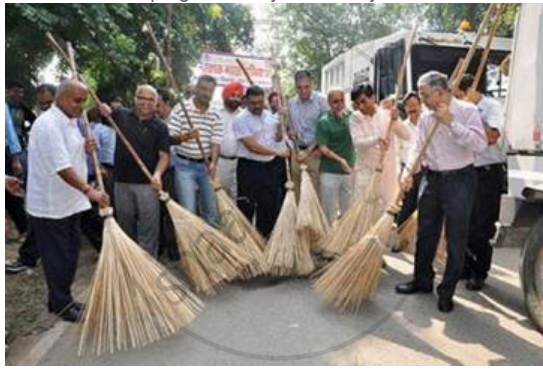
- When was this campaign launched?
- Mention the chief objectives of this campaign.
The figure given below shows a kind of pollution. Study the figure and answer the following questions.
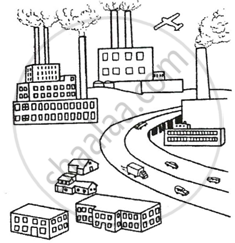 |
- Define the kind of pollution shown here.
- Name two types of the kind of pollution shown here.
- Write two main sources of above mentioned pollution with one example each.
- Write two points to control the given pollution.
Study the figure shown here and answer the following questions.
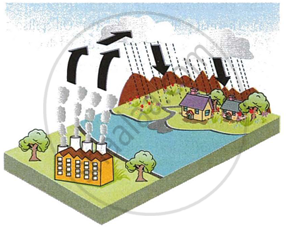 |
- Identify the kind of pollution and define it.
- Mention four main sources of the pollution.
- Write two harmful effects the above-mentioned pollution for the living organisms.
Study the pictures given below of the two main categories of wastes and answer the questions:
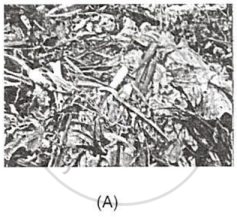 |
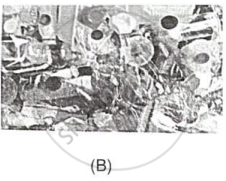 |
- Identify the categories of wastes in (A) and (B).
- Which of the above category of wastes can be used to prepare compost?
- Mention one control measure to manage the waste of category (B).
Pollution is on the rise due to a rapid increase in the number of automobiles and buildings. All of these release a large amount of harmful gases and particulate pollutants in the atmosphere which react with atmospheric moisture and produce various kinds of acidic gases.
- Mention two main gases which are emitted from the industries into the atmosphere.
- What are the two main acids produced in the atmosphere when poisonous gases combine with the atmospheric moisture?
- Write two harmful effects of acid rain.
Solutions for 16: Pollution: A Rising Environmental Problem
Selina solutions for कन्साइस बायोलॉजी [इंग्रजी] इयत्ता १० आयसीएसई chapter 16 - Pollution: A Rising Environmental Problem
Shaalaa.com has the CISCE Mathematics कन्साइस बायोलॉजी [इंग्रजी] इयत्ता १० आयसीएसई CISCE solutions in a manner that help students grasp basic concepts better and faster. The detailed, step-by-step solutions will help you understand the concepts better and clarify any confusion. Selina solutions for Mathematics कन्साइस बायोलॉजी [इंग्रजी] इयत्ता १० आयसीएसई CISCE 16 (Pollution: A Rising Environmental Problem) include all questions with answers and detailed explanations. This will clear students' doubts about questions and improve their application skills while preparing for board exams.
Further, we at Shaalaa.com provide such solutions so students can prepare for written exams. Selina textbook solutions can be a core help for self-study and provide excellent self-help guidance for students.
Concepts covered in कन्साइस बायोलॉजी [इंग्रजी] इयत्ता १० आयसीएसई chapter 16 Pollution: A Rising Environmental Problem are Waste, Pollution, Soil Pollution, Sources of Soil Pollution, Radiation, Noise Pollution, Sources of Noise Pollution, Acid Rain, Greenhouse Effect and Global Warming, Ozone Layer Depletion, Effects on Human Health, Control of Pollution, Swachh Bharat Abhiyan (Clean India Movement), Plastic Pollution, Waste, Pollution, Soil Pollution, Sources of Soil Pollution, Radiation, Noise Pollution, Sources of Noise Pollution, Acid Rain, Greenhouse Effect and Global Warming, Ozone Layer Depletion, Effects on Human Health, Control of Pollution, Swachh Bharat Abhiyan (Clean India Movement), Plastic Pollution, Waste, Pollution, Soil Pollution, Sources of Soil Pollution, Radiation, Noise Pollution, Sources of Noise Pollution, Acid Rain, Greenhouse Effect and Global Warming, Ozone Layer Depletion, Effects on Human Health, Control of Pollution, Swachh Bharat Abhiyan (Clean India Movement), Plastic Pollution.
Using Selina कन्साइस बायोलॉजी [इंग्रजी] इयत्ता १० आयसीएसई solutions Pollution: A Rising Environmental Problem exercise by students is an easy way to prepare for the exams, as they involve solutions arranged chapter-wise and also page-wise. The questions involved in Selina Solutions are essential questions that can be asked in the final exam. Maximum CISCE कन्साइस बायोलॉजी [इंग्रजी] इयत्ता १० आयसीएसई students prefer Selina Textbook Solutions to score more in exams.
Get the free view of Chapter 16, Pollution: A Rising Environmental Problem कन्साइस बायोलॉजी [इंग्रजी] इयत्ता १० आयसीएसई additional questions for Mathematics कन्साइस बायोलॉजी [इंग्रजी] इयत्ता १० आयसीएसई CISCE, and you can use Shaalaa.com to keep it handy for your exam preparation.
