Please select a subject first
Advertisements
Advertisements
What is the action of following on ethyl bromide:
Na in dry ether
Concept: Reaction with Active Metals
Write chemical reactions for the following conversions:
Bromobenzene to toluene.
Concept: Reaction with Active Metals
Write IUPAC names of following compounds.
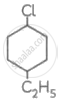
Concept: Nomenclature of Halogen Derivatives
Write IUPAC names of following compounds.

Concept: Nomenclature of Halogen Derivatives
The allylic halide, among the following, is ______.
Concept: Classification of Halogen Derivatives
Write the chemical reaction for the following:
Chlorobenzene is heated with fuming H2SO4.
Concept: Reaction with Active Metals
Write the structure of the product formed when chlorobenzene is treated with sodium metal in the presence of dry ether.
Concept: Reaction with Active Metals
Explain the dehydrohalogenation reaction of 2-chlorobutane.
Concept: Chemical Properties of Halogen Derivatives
Write the product formed by chlorobenzene treated with a fuming H2SO4 reaction.
Concept: Reaction with Active Metals
What is the action of following on ethyl bromide?
silver nitrite
Concept: Reaction with Active Metals
Among the following vinylic halide is ______.
Concept: Classification of Halogen Derivatives
What is the action of following on ethyl bromide?
alcoholic sodium hydroxide
Concept: Chemical Properties of Halogen Derivatives
Complete the reaction:
\[\ce{CH3CH2Cl ->[AgCN][alc.\Delta]}\] ?
Concept: Chemical Properties of Halogen Derivatives
Discuss the mechanism of alkaline hydrolysis of bromomethane.
Concept: Reactions of Haloalkanes - Nucleophilic Substitution Reactions
which of the following carbocations is least stable?
(A) 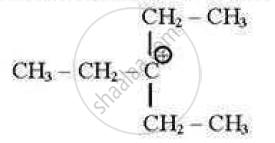
(B)
(C)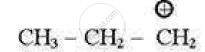
(D)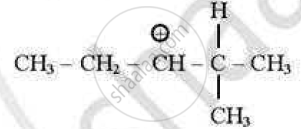
Concept: Nature of C-X Bond of Haloalkanes and Haloarenes
The stability order for carbocation is _______.
(A) 2° > 3° > 1°
(B) 3° > 2° > 1°
(C) 3° > 1° > 2°
(D) 1° > 3° > 2°
Concept: Reactions of Haloalkanes - Nucleophilic Substitution Reactions
How are the following conversions carried out?
2-methylbutan-1-ol into 2 -methylbutanoic acid.
Concept: Nomenclature of Haloalkanes and Haloarenes
But-1-ene on reaction with HCl in the presence of sodium peroxide yields _______.
Concept: Nomenclature of Haloalkanes and Haloarenes
IUPAC name of is C6H5 − CH2 − C − CH2 − CH2 − CH2 − CH3 is _______
(A) 1-Phenylhexan-2-one
(B) 6-Phenylhexan-5-one
(C) 1-Benzylhexan-5-one
(D) Dodecan-5-one
Concept: Nomenclature of Haloalkanes and Haloarenes
How is nitromethane prepared from the following?
alkyl halide
Concept: Nomenclature of Haloalkanes and Haloarenes
