Please select a subject first
Advertisements
Advertisements
Explain the administrative structure of Mauryan empire.
Concept: An Early Empire
- On the given Political outline map of India, locate and label the following with appropriate symbols:
- Ujjaiyini - A Mahajanpada
- Kalibanga - A matured Harappan Site
-
- Panipat - A territory under the control of Mughals
OR - Thanjavur - An empire of the Medieval Period.
- Panipat - A territory under the control of Mughals
- On the same outline map, two places regarding the centre of the Indian National Movement have been marked as 'A' and 'B'. Identify them and write their correct names on the lines drawn near them.

Concept: The Earliest States
Arrange the following dynasties in chronological order:
- Nandas
- Shungas
- Mauryas
- Guptas
Concept: The Earliest States
In which of the following regions Satvahanas rules during second century BCE to Second century CE?
Concept: New Notions of Kingship
Who among the following rulers rebuilt 'Sudarshan Lake'?
Concept: A Changing Countryside
Describe the role of Dr. B.R. Ambedkar in the Constituent Assembly of India.
Concept: Kinship and Marriage: Many Rules and Varied Practices
Which of the following dynasties queen Prabhavati belonged to?
Concept: Beyond Birth Resources and Status
Read the given source and answer the questions that follow:
|
A Tiger-like Husband This is a summary of a story from the Adi Parvan of the Mahabharata: The Pandavas had fled into the forest. They were tired and fell asleep; only Bhima, the second Pandava, renowned for his prowess, was keeping watch. A man-eating rakshasa caught the scent of the Pandavas and sent his sister Hidimba to capture them. She fell in love with Bhima, transformed herself into a lovely maiden and proposed to him. He refused. Meanwhile, the rakshasa arrived and challenged Bhima to a wrestling match. Bhima accepted the challenge and killed him. The others woke up hearing the noise. Hidimba introduced herself, and declared her love for Bhima. She told Kunti: "I have forsaken my friends, my dharma and my kin; and A good lady, chosen your tiger-like son for my man ... whether you think me a fool, or your devoted servant, let me join you, great lady, with your son as my husband." Ultimately, Yudhisthira agreed to the marriage on condition that they would spend the day together but that Bhima would return every night. The couple roamed all over the world during the day. In due course Hidimba gave birth to a rakshasa boy named Ghatotkacha. Then the mother and son left the Pandavas. Ghatotkacha promised to return to the Pandavas whenever they needed him. |
- How was Hidimba's culture different from Pandavas?
- Why did Kunti approve Hidimba's plea from Bhima?
- How did this incident prove Kunti's far sightedness?
Concept: Social Differences: Within and Beyond the Framework of Caste
Who among the following was the author of 'Ashtadhyayi', a work on Sanskrit grammar?
Concept: Handling Texts Historians and the Mahabharata
Identify the character of Mahabharata with the help of following information:
|
Concept: Handling Texts Historians and the Mahabharata
Describe the teachings of Jainism.
Concept: Beyond Worldly Pleasures: the Message of Mahavira
Look at the figure given below and identify the structural feature marked as 'X of the Sanchi stupa from the following options:
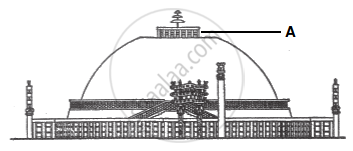
Concept: Stupas
Which of the following is correctly matched?
Concept: The Background: Sacrifices and Debates
Describe the main teachings of Buddhism.
Concept: The Teachings of the Buddha
Which one of the following statement is correct?
Concept: Stupas
Who among the following rulers worked on the preservation of Sanchi Stupa?
Concept: A Glimpse of Sanchi
Read the following source and answer the questions that follow:
|
The Therigatha This unique Buddhist text, part of the Sutta Pitaka, is a collection of verses composed by bhikkhunis. It provides insight into women's social and spiritual experiences. Punna, a dasi or slave woman, went to the river each morning to fetch water for her master's household. There she would daily see a Brahmana performing bathing rituals. One morning she spoke to him. The following are verses composed by Punna, recording her conversation with the Brahmana : I am a water carrier: The Brahmana replied: Punna said: Whoever told you |
- How does the text provide insight into Punna's spiritual experience?
- How is Purina reflected as an awakened soul?
- Which of the teachings to Buddha are evident in the composition?
Concept: Followers of the Buddha
- On the given political outline map of India, locate and label the following with appropriate symbols:
- Sanchi - A Stupa
- Dholavira - A matured Harappan Site
-
- Shahjahanabad (Delhi) - Territory under the control of Mughals.
- Golconda - An empire of 14th to 18th century.
- On the same outline map, two places related with the centres of the Revolt of 1857 have been marked as 'A' and 'B'. Identify them and write their correct names on the lines drawn near them.
- Calcutta
- Banaras

Concept: Stupas
Which of the following countries 'Duarte Barbosa' belonged to?
Concept: Francois Bernier - a Doctor with a Difference
Read the given source and answer the questions that follow:
|
A language with an enormous range Al-Biruni described Sanskrit as follows: If you want to conquer this difficulty (i.e. to learn Sanskrit), you will not find it easy, because the language is of an enormous range, both in words and inflections, something like the Arabic, calling one and the same thing by various names, both original and derivative, and using one and the same word for a variety of subjects, which, in order to be properly understood, must be distinguished from each other by various qualifying epithets. |
- How did Al-Biruni compare Sanskrit with Arabic?
- Give an example of the work Al-Biruni translated in Arabic from Sanskrit.
- Analyse the reason of Sanskrit considered as a language with enormous range.
Concept: Making Sense of an Alien World Al-biruni and the Sanskritic Tradition
