Please select a subject first
Advertisements
Advertisements
Write the IUPAC name of the following compound and classify it as primary, secondary and tertiary amine.
(CH3CH2)2NCH3
Concept: Nomenclature of Amines
Account for the following:
Methylamine in water reacts with ferric chloride to precipitate hydrated ferric oxide.
Concept: Nomenclature of Amines
Arrange the following:
In increasing order of basic strength:
C6H5NH2, C6H5NHCH3, C6H5CH2NH2
Concept: Chemical Reactions of Amines - Basic Character of Amines
Write a short note on the following:
Hoffmann’s bromamide reaction
Concept: Preparation of Amines
Write the structure of 2,4-dinitrochlorobenzene
Concept: Nomenclature of Amines
Give reasons for the following:
CH3NH2 is more basis than C6H5NH2.
Concept: Classification of Amines
Write the IUPAC name of the given compound :
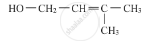
Concept: Nomenclature of Amines
Illustrate the following reactions giving suitable example in each case
Ammonolysis
Concept: Physical Properties of Amines
Illustrate the following reactions giving suitable example in each case
Coupling reaction
Concept: Chemical Reaction of Diazonium Salts - Reactions Involving Retention of Diazo Group
Illustrate the following reactions giving suitable example in each case
Acetylation of amines
Concept: Chemical Reactions of Amines - Electrophilic Substitution
Give the structures of A, B and C in the following reactions :

Concept: Preparation of Amines
Give the structures of A, B and C in the following reactions :

Concept: Preparation of Amines
Give the structures of A, B and C in the following reactions :

Concept: Preparation of Amines
Arrange the following in increasing order of basic strength :
C6H5NH2, C6H5NHCH3, C6H5N(CH3)2
Concept: Physical Properties of Amines
Draw the structures of the following compounds :
N2O5
Concept: Chemical Reactions of Amines - Reaction with Nitrous Acid
Account for the following:
Gabriel phthalimide synthesis is not preferred for preparing aromatic primary amines.
Concept: Preparation of Amines
Account for the following:
On reaction with benzene sulphonyl chloride, primary amine yields product soluble in alkali whereas secondary amine yields product insoluble in alkali.
Concept: Chemical Reactions of Amines - Reaction with Arylsulphonyl Chloride
Write structures of compounds A and B in each of the following reactions: 
Concept: Structure of Amines
Write structures of compounds A and B in each of the following reactions:
Concept: Preparation of Amines
Write chemical equation in support of your answer.
Out of  Cl and O2N Cl. which one is more reactive towards nucleophilic substitution reaction and why?
Concept: Chemical Reactions of Amines - Reaction with Arylsulphonyl Chloride
