Advertisements
Advertisements
प्रश्न
Why alkyl halides though polar are immiscible with water?
Advertisements
उत्तर
Alkyl halides are polar molecules, therefore, their molecules are held together by dipole-dipole attraction. The molecules of H2O are held together by H-bonds. Since the new forces of attraction between water and alkyl halide molecules are weaker than the force of attraction already existing between alkyl halide - alkyl halide molecules and water - water molecules therefore alkyl halides are immiscible (not soluble) in water. Alkyl halide are neither able to form H-bonds with water nor able to break the H-bonding network of water.
APPEARS IN
संबंधित प्रश्न
Give reasons : n-Butyl bromide has higher boiling point than t-butyl bromide.
Arrange the set of compounds in order of increasing boiling points.
Bromomethane, Bromoform, Chloromethane, Dibromomethane.
Explain why alkyl halides, though polar, are immiscible with water?
p-Dichlorobenzene has higher m.p. and lower solubility than those of o- and m-isomers. Discuss.
Define racemic mixture.
Why dextro and laevorotatory isomers of Butan-2-ol are difficult to separate by fractional distillation?
Which of the following compounds has the highest boiling point?
How many structural isomers are possible for a compound with the molecular formula C3H7Cl?
Which of the following halide is 2°?
The decreasing order of boiling points of alkyl halides is:
Which of the following is liquid at room temperature (b.p. is shown against it)?
Arrange the following compounds in the increasing order of their densities.
(a)

(b)

(c)
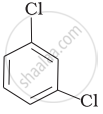
(d)

Reaction of \[\ce{C6H5CH2Br}\] with aqueous sodium hydroxide follows ______.
Which of the following compounds will have the highest melting point and why?
| (I) |  |
|
(II) |
 |
| (III) | 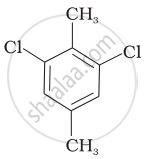 |
Arrange the following compounds in increasing order of their boiling points:
CH3CH2OH, CH3−CHO, CH3−COOH
Arrange the isomeric dichlorobenzene in the increasing order of their boiling point and melting points.
Write the structure of the following organic halogen compound.
1,4-Dibromobut-2-ene
Write the structure of the following organic halogen compound.
4-tert-Butyl-3-iodoheptane
Write the structure of the following organic halogen compound.
4-tert-Butyl-3-iodoheptane
Write the structure of the following organic halogen compound.
4-tert-Butyl-3-iodoheptane
Name the following halides according to the IUPAC system and classify them as alkyl, allyl, benzyl (primary, secondary, tertiary), vinyl or aryl halide:
\[\ce{CH3 C(C2H5)2CH2Br}\]
Write the structure of the following organic halogen compound.
4-tert-Butyl-3-iodoheptane
