Advertisements
Advertisements
प्रश्न
Advertisements
उत्तर
APPEARS IN
संबंधित प्रश्न
Redraw the circuit of question 1, putting in an ammeter to measure the current through the resistors and a voltmeter to measure the potential difference across the 12 Ω resistors. What would be the readings in the ammeter and the voltmeter?
What do the following symbols mean in circuit diagrams?
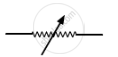
Draw circuit symbols for
a battery of three cells
Find the odd one out and justify it.
Fuse wire, M.C.B., Rubber Gloves, Generator
Answer the following question.
With the help of a suitable circuit diagram prove that the reciprocal of the equivalent resistance of a group of resistances joined in parallel is equal to the sum of the reciprocals of the individual resistances.
Write scientific reason.
It is beneficial to carry electrical energy in AC form as it is carried over long distances.
Flow of electricity through a closed circuit is _____.
Assertion: People struck by lightning receive a severe electrical shock.
Reason: Lightning carries very high voltage.
The rate of flow of electric charges in a circuit is called ______.
An electric motor rated 1100 W is connected to 220 V mains. Find:
- The current drawn from the mains,
- Electric energy consumed if the motor is used for 5 hours daily for 6 days.
- Total cost of energy consumed if the rate of one unit is 5.
