Advertisements
Advertisements
प्रश्न
What do you infer from Gardiner’s essay ‘On the rule of the Road'?
Advertisements
उत्तर
A.G. Gardiner’s essay ‘On the rule of the Road’ is a treatise on “liberty”. He starts the essay with an anecdote. A liberty-drunk Russian lady starts walking down the middle of the Highway frustrating car drivers, bus drivers, and the traffic police. When questioned about her behavior, she just replied that she now has the liberty to walk anywhere she liked. The author observes that if a pedestrian gives up the pavement in preference to the road, cars will be forced to move on to the pavement. This would result in universal chaos. Everybody would be getting in everybody’s way. Nobody would get anywhere. Individual liberty would have become social anarchy.
Under such circumstances, the world is in danger of getting liberty drunk. The rule of the road reminds the readers that in order that liberties of all may be preserved, the liberty of everybody must be curtailed. Thus the traffic police at Piccadilly Circus is not a symbol of tyranny but of liberty. He doesn’t hinder but helps the smooth flow of traffic. One has to allow curtailment of one’s liberty to enjoy the fruits of social order.
APPEARS IN
संबंधित प्रश्न
Who did the narrator meet at the outskirts of Verona?
What was Lucia suffering from?
What made the boys work so hard?
Write a character sketch of Nicola and Jacopo.
Adversity brings out the best as well as the worst in people. Elucidate this statement with reference to the story
What seems ‘curious’ to the author?
What is the second golden rule in the preparation of tea?
Do tea lovers generally like strong tea or weak tea?
Why does the author prefer the cylindrical cup to a flat cup?
What should be poured into the cup first–tea or milk?
Why does the author advise removing cream from the milk?
What are the author’s views on China tea?
Summarise George Orwell’s distinctive ideas in “A Nice Cup of Tea”.
There are several physically-challenged people who have lived successful and meaningful lives. Here are a few personalities who have fought great odds and lived a life of blazing achievements. Let’s share what we know about each of them and complete the table below.
| Name of the personality | Nature of challenge | Field of achievement |
| e.g. Beethoven | Hearing impairment | Music |
| Demosthenes | ||
| Helen Keller | ||
| Mariyappan Thangavelu | ||
| Mozart | ||
| John Milton | ||
| Sudha Chandran |
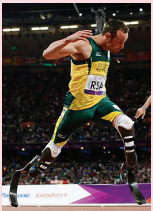
What injuries did they sustain in the accident?
Describe the ‘Grand Prix’ at Cape Town’s Red Cross Children’s Hospital.
How did a casual incident in a hospital help Dr. Barnard perceive a new dimension of life?
Life is unjust and cruel to certain people. Do they all resign themselves to their fate? Can you think of some who have fought their disabilities heroically and remained a stellar example for others? (for e.g. the astrophysicist Stephen Hawking, a paraplegic). Give an account of one such person and his/her struggle to live a fruitful life.
Tick the qualities that are required to achieve such a feat.
| passion | reward | determination | physical |
| fame | faith | courage | money |
| drive | vengeance | inspiration | self-satisfaction |
| vision | undying spirit | inner-urge | perseverance |
What did Hillary find in a tiny hollow?
Why was the original zest fading away?
How did the firm snow at the higher regions fill them with hope?
When did the children shy away from the chair?
How did Maamanaar handle the chair at home?
Why did the family find it difficult to make a chair?
Narrate the humorous incidents that happened in the author’s home before and after the arrival of the chair.
From the pictures given below, identity the actions that may cause inconvenience and discomfort to others. Discuss.

Define ‘liberty’ as perceived by the author.
Explain in your own words, "What freedom means?"
Para 18
My first feelings were of relief–
relief that there were no more steps to
cut, no more ridges to traverse, and no
more humps to tantalize us with hopes
of success. I looked at Tenzing. In spite of
the balaclava helmet, goggles, and oxygen
mask – all encrusted with long icicles–that
concealed his face, there was no disguising
his grin of delight as he looked all around
him. We shook hands, and then Tenzing
threw his arm around my shoulders and
we thumped each other on the back until
we were almost breathless. It was 11.30
a.m. The ridge had taken us two and a
half hours, but it seemed like a lifetime
To the east was our giant
Describe the feelings of Edmund Hillary and Tenzing as they reached the top of the Summit. (Para 18)
