Advertisements
Advertisements
प्रश्न
Thinking about the Poem
What do the last four lines of the poem mean to you?
Advertisements
उत्तर
In the last four lines, the poet inspires us to face the wind, which symbolises the hardships of our lives, courageously. He tells us that the wind can only extinguish the weak fires; it intensifies the stronger ones. Similarly, adversities deter the weak-hearted but make stronger those who have unfaltering will. In such a case, befriending the wind or the hardships of life makes it easier for us to face them.
संबंधित प्रश्न
Take down the following scrambled version of a story, that your teacher will dictate to
you, with appropriate punctuation marks. Then, read the scrambled story carefully and try to rewrite it rearranging the incidents. A grasshopper, who was very hungry, saw her and said, “When did you get the corn? I am dying of hunger.” She wanted to dry them. It was a cold winter’s day, and an ant was bringing out some grains of corn from her home. She had gathered the corn in summer. “I was singing all day,” answered the grasshopper.
“If you sang all summer,” said the ant, “you can dance all winter.”
“What were you doing?” asked the ant again.
The grasshopper replied, “I was too busy.”
“I collected it in summer,” said the ant. “What were you doing in summer? Why did you not store some corn?”
On the basis of your understanding of the poem, answer the following question
by ticking the correct choice.
In the poem 'The Solitary Reaper' to whom does the poet say, ' Stop here or gently
pass'?
Tiger in Trouble
Since some tiger parts are used in traditional medicine, the tiger is in danger. Apart from its head being used as a trophy to decorate walls, tigers are also hunted for the following.
- Head: As a trophy on the wall.
- Brain: To cure laziness and pimples.
- Teeth: For rabies, asthma and sores.
- Blood: For strengthening the constitution and will power.
- Fat: For vomiting, dog bites, bleeding haemorrhoids and scalp ailments in children.
- Skin: To treat mental illness and to make fur coats.
- Whiskers: For toothache.
In groups of six, work on one of the mysteries given below by surfing the net and through other sources. Create a power point presentation/a photo essay.
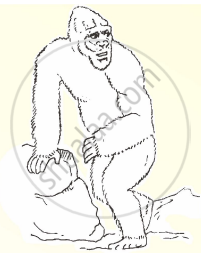
- Yeti, the abominable snowman
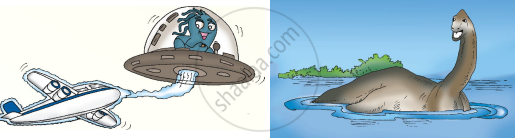
- Loch Ness Monster
- UFOs (Unidentified Flying Objects)
- Lost city of Atlantis
- Crop circles
- Nazca lines
Six humans trapped by happenstance
In black and bitter cold.
Each one possessed a stick of wood,
Or so the story's told.
Their dying fire in need of logs;
The first man held his back.
For on the faces around the fire,
He noticed one was black.
Read the lines given above and answer the question that follow:
Why does the poet use this diction?
He flungs himself down in a corner to recoup from the fatigue of his visit to the shop. His wife said, “You are getting no sauce today, nor anything else. I can’t find anything to give you to eat. Fast till the evening, it’ll do you good. Take the goats and be gone now,” she cried and added, “Don’t come back before the sun is down.”
Read the extract given below and answer the question that follow.
What lie did Muni tell the shopkeeper?
Mrs. Thompson did not reply, but presently turned towards the little chamber where her husband had deposited Maggie; and, pushing open the door, went quietly in. Joe did not follow; he saw that, her state had changed, and felt that it would be best to leave her alone with the child. So he went to his shop, which stood near the house, and worked until dusky evening released him from labor. A light shining through the little chamber windows was the first object that attracted Joe’s attention on turning towards the house: it was a good omen. The path led him by this windows and, when opposite, he could not help pausing to look in. It was now dark enough outside to screen him from observation. Maggie lay, a little raised on the pillow with the lamp shining full upon her face. Mrs. Thompson was sitting by the bed, talking to the child; but her back was towards the window, so that her countenance was not seen. From Maggie’s face, therefore, Joe must read the character of their intercourse. He saw that her eyes were intently fixed upon his wife; that now and then a few words came, as if in answers from her lips; that her expression was sad and tender; but he saw nothing of bitterness or pain. A deep-drawn breath was followed by one of relief, as a weight lifted itself from his heart.
Read the extract given below and answer the question that follow.
What did Joe see from the window?
Lights were shining from every window, and there was a savoury smell of roast goose, for it was New-year’s eve—yes, she remembered that. In a corner, between two houses, one of which projected beyond the other, she sank down and huddled herself together. She had drawn her little feet under her, but she could not keep off the cold; and
she dared not go home, for she had sold no matches, and could not take home even a penny of money. Her father would certainly beat her; besides, it was almost as cold at home as here, for they had only the roof to cover them, through which the wind howled, although the largest holes had been stopped up with straw and rags. Her little hands were almost frozen with the cold. Ah! perhaps a burning match might be some good, if she could draw it from the bundle and strike it against the wall, just to warm her fingers. She drew one out—“scratch!” how it sputtered as it burnt! It gave a warm, bright light, like a little candle, as she held her hand over it. It was really a wonderful light. It seemed to the little girl that she was sitting by a large iron stove, with polished brass feet and a brass ornament. How the fire burned! and seemed so beautifully warm that the child stretched out her feet as if to warm them, when, lo! the flame of the match went out, the stove vanished, and she had only the remains of the half-burnt match in her hand.
Read the extract given below and answer the question that follow.
What did she imagine when she lighted the first match?
She lighted another match, and then she found herself sitting under a beautiful Christmas-tree. It was larger and more beautifully decorated than the one which she had seen through the glass door at the rich merchant’s. Thousands of tapers were burning upon the green branches, and colored pictures, like those she had seen in the show- windows, looked down upon it all. The little one stretched out her hand towards them, and the match went out.
The Christmas lights rose higher and higher, till they looked to her like the stars in the sky. Then she saw a star fall, leaving behind it a bright streak of fire. “Someone is dying,” thought the little girl, for her old grandmother, the only one who had ever loved her, and who was now dead, had told her that when a star falls, a soul was going up to God.
Read the extract given below and answer the question that follow.
What happened when she stretched her hand to touch?
What do you think of Antonio and of Shylock 1vi' regard to the signing of the bond?
Write ‘True’ or ‘False’ against each of the following.
(i)Soapy stole a man’s umbrella. ______
(ii) The owner of the umbrella offered to give it to Soapy. _______
(iii) The man had stolen the umbrella that was now Soapy’s. ________
(iv) Soapy threw away the umbrella. ______
How did the kind old couple treat their dog?
How did Ray tackle the evil-minded shoppers?
The monkey was happy living in the fruit tree, but his happiness was not complete, what did he miss?
Answer the following question:
Describe Kalpana Chawla’s first mission in space.
Answer the question.
What does he imagine about
what they do at home?
Multiple Choice Question:
What does the expression leave their greens’ mean?
What does the phrase “take to task in the above passage mean?
What feeling of the poet is exhibited in his peeping through the window?
Fill in the blanks with the words given in the box.
| how, what, when, where, which |
Do you know ______ to ride a bicycle? I don’t remember ______ and ______ I learnt it
