मराठी
सी.आई.एस.सी.ई.आयसीएसई ICSE Class 8

The Diagram Represents an Isotope of Hydrogen H. Answer the Following: If an Isotope of ‘H’ Has Mass No. = 2, How Many Electrons Does It Have. - Chemistry

Advertisements
Advertisements

प्रश्न

The diagram represents an isotope of hydrogen [H]. Answer the following:
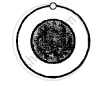

Atomic no. = 1
Mass no. = 1

If an isotope of ‘H’ has mass no. = 2, how many electrons does it have.

एका वाक्यात उत्तर
Advertisements

उत्तर

One electron.

shaalaa.com
  या प्रश्नात किंवा उत्तरात काही त्रुटी आहे का?
पाठ 4: Atomic Structure - Objective type questions

APPEARS IN

संबंधित प्रश्‍न

With the help of given Table, find out the mass number of oxygen.

Composition of Atoms of the First Eighteen Elements with Electron Distribution in Various Shells
Name of Element Symbol Atomic Number Number of protons Number of Neutrons Number of Electrons Distribution of Electrons Valency
K L M N
Hydrogen H 1 1 - 1 1 - - - 1
Helium He 2 2 2 2 2 - - - 0
Lithium Li 3 3 4 3 2 1 - - 1
Beryllium Be 4 4 5 4 2 2 - - 2
Boron B 5 5 6 5 2 3 - - 3
Carbon C 6 6 6 6 2 4 - - 4
Nitrogen N 7 7 7 7 2 5 - - 3
Oxygen O 8 8 8 8 2 6 - - 2
Fluorine F 9 9 10 9 2 7 - - 1
Neon Ne 10 10 10 10 2 8 - - 0
Sodium Na 11 11 12 11 2 8 1 - 1
Magnesium Mg 12 12 12 12 2 8 2 - 2
Aluminium Al 13 13 14 13 2 8 3 - 3
Silicon Si 14 14 14 14 2 8 4 - 4
Phosphorus P 15 15 16 15 2 8 5 - 3.5
Sulphur S 16 16 16 16 2 8 6 - 2
Chlorine Cl 17 17 18 17 2 8 7 - 1
Argon Ar 18 18 22 18 2 8 8   0

What are the two main features of Rutherford’s atomic model?


State the mass number, the atomic number, number of neutrons and electronic configuration of the following atoms.

`""^12""_6C, ""^16""_8O, ""^19""_9F, ""^20""_10Ne, ""_13""Al""^27, ""_17""Cl""^35` 

Also, draw atomic diagrams for them.


The mass number of an element is 23 and it contains 11 electrons. What is the number of protons and neutrons in it? What is the atomic number of the element?


An element A atomic number 7 mass numbers 14
B electronic configuration 2,8,8
C electrons 13, neutrons 14
D Protons 18 neutrons 22
E Electronic configuration 2,8,8,1

State Valency of each element

An element A atomic number 7 mass numbers 14

B electronic configuration 2,8,8

C electrons 13, neutrons 14

D Protons 18 neutrons 22

E Electronic configuration 2,8,8,1

State (i) Valency of each element (ii) which one is a metal (iii) which is non-metal (iv) which is an inert gas


Match the atomic numbers 4,8,10,15 and 19 with the following:

Element which can form trivalent ion


Draw the atomic diagram of the following element showing the distribution of – protons, neutrons and the electrons in the various shell of the atom.

Oxygen – \[\ce{^16_8O}\]

[The upper number represent the – mass number and the lower number represent the – atomic number e.g. calcium – mass number = 40, atomic number = 20]


The diagram represents an isotope of hydrogen [H]. Answer the following:


Atomic no. = 1
Mass no. = 1

Which sub-atomic particles in the 3 isotopes of ‘H’ are the same.


Elements A, B and C have atomic numbers 9, 20 and 10 respectively.

  1. State which one is
    (1) a non-metal,
    (2) a metal,
    (3) chemically inert.[A,B,C]
  2. Write down the formula of the compound formed by two of the above elements.[BA2]

Name the 3 sub-atomic particles of an atom.


Share
Notifications

Englishहिंदीमराठी


      Forgot password?
Use app×