Advertisements
Advertisements
प्रश्न
Sit in groups of five. Now, each student will tell a story. Decide which story was the best and declare a or of the group.
Advertisements
उत्तर
Do it yourself.
APPEARS IN
संबंधित प्रश्न
What could these persons have done?
What is the encaged bird fearful of ?
It was roses, roses, all the way,
With myrtle mixed in my path like mad;
The house-roofs seemed to heave and sway,
The church-spires flamed, such flags they had,
A year ago on this very day.
Read the above lines and answer the question that follow.
“The house-tops seemed to heave and sway”. Explain
After his parents died in a car accident, his uncle looked________him.
Fill in the blank with an appropriate word:
Ali took ……… his cap and wiped his face.
If Mary catches the first bus, she will be on time for school.
(Begin : Unless …………….)
Fill in each of the numbered blanks with the correct form of the word given in brackets. Do not copy the passage, but write in the correct serial order the word or phrase appropriate to the blank space.
Example:
(0) One morning, I (0) ……. (see) the python curled up on the dressing table.
Answer: saw.
It was (1) ……. (gaze) at its own reflection in the mirror. I (2) ……… (go) for grandfather, but by the time we (3) ……… (return) to the room, the python (4) …….. (move) on. He was seen in the garden, and once the cook saw him, (5) ……… (crawl) up the ladder to the roof. Then we (6) …….. (find) him on the dressing table again, (7) (admire) himself in the mirror. “He’s trying to look better for Aunt Mabel,” I said. I (8) ……. (regret) this remark immediately because grandmother overheard it and held up my pocket money for the rest of the week!
What does the phrase “strange to tell” mean?
Examine the subtle humour in the narration of the story that lightens the gravity of the subject matter.
Discuss in pairs or in small groups
The Indian family system offers more security to the aged than what is found in the West.
How did the narrator learn to distinguish between 'a flask' and 'a thermos'?
Answer the following question:
“It was to be a battle of champions.” (8)
(i) What qualities did the two champions have? Pick out words and phrases from the paragraph above this line in the text and write them down.
|
Mongoose |
Cobra |
| (a) ________ | (a) ________ |
| (b) ________ | (b) ________ |
| (c) ________ | (c) ________ |
(ii) What did the cobra and the mongoose do, to show their readiness for the fight?
If you see someone lonely or sad you will –
- _______________________
- _______________________
- _______________________
Understand the quotation and expand it in a paragraph format.
'Pride goes on horseback, but returns on foot'.
Prepare a formal invitation using the following format:
|
Mr and Mrs _______________________ solicit the pleasure of your company on the occasion of the ____________________ of their __________________ on _______________ (day), date _______________. Venue __________________ Time ____________________ (Include other requests like RSVP, No presents please, etc. at the bottom.) |
Write a report of an event held at your school using Passive voice. Use Simple Past Tense to narrate the event.
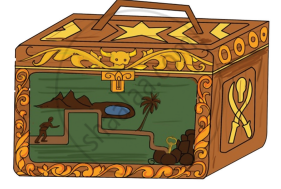
Nalan’s grandfather showed him an old treasure trunk. A road map was stuck on the trunk. It showed the spot where a key was hidden. Look at the road map and write five directions to reach the spot where the key is hidden. Discuss with your partner and compare your directions with those of your classmates.
- ____________
- ____________
- ____________
- ____________
- ____________
State whether the following statement are true or false
Bob wanted to stay for half an hour more than the appointed time.
Write letter to your father asking permission to go on a educational tour.
Write a composition (in approximately 400-450 words) on the following subject:
During the summer break, you joined a group of young people who read to the elderly at a senior citizens home. Narrate your experience of reading to the elderly and the interactions you had with them. How did this experience impact you?
