Advertisements
Advertisements
प्रश्न
Seminal plasma, the fluid part of semen, is contributed by.
- Seminal vesicle
- Prostate
- Urethra
- Bulbourethral gland
पर्याय
i, ii, and iv
ii, iii and iv
i and iv
i and ii
Advertisements
उत्तर
i, ii, and iv
APPEARS IN
संबंधित प्रश्न
Write the location and functions of the following in human testes :
Leydig cells
Differentiate between Human skin cell and Human ovum (number of chromosomes).
The exact location of the seminal vesicle
Why is it important that a very large number of sperms should be present in the semen ?
Which one of the following is the correct route that a sperm follows when it leaves the testis of a mammal ?
Name the following :
The body part in which the testes are present in a human male.
Describe the functions of the following:
Oviduct
Name the Following
The male gamete (male reproductive cells) of mammals.
Name the Following
The site of production of sperms in man.
In the given diagram represents the
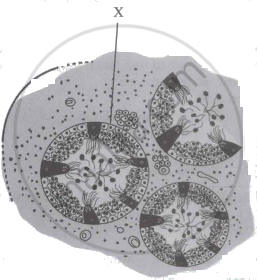
The ejaculatory ducts open into the ______.
Select the MISMATCHED pair.
Increased secretion of which hormone start the process of sperm formation at the time of puberty?
Which of the following hormone maintains the function of male sex accessory gland and ducts?
Spot the odd one out from the following structures with reference to the male reproductive system.
The primary sex organ of a human male is ______.
Crypts of Lieberkuhn are absent in ______.
Draw a labelled diagram of the male reproductive system.
What is the significance of Testes being placed in Scrotal sacs?
Can there be any abnormal situation regarding testes location? If so, what is that and what is the harm caused due to it?
