Advertisements
Advertisements
प्रश्न
Negative acceleration is called ______.
Advertisements
उत्तर
Negative acceleration is called retardation (or) deceleration.
APPEARS IN
संबंधित प्रश्न
From the diagram given below, calculate acceleration.
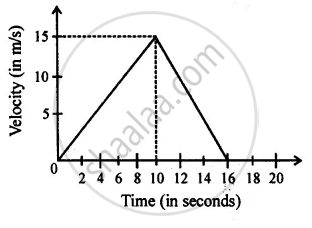
A motorbike, initially at rest, picks up a velocity of 72 kmh−1 over a distance of 40 m. Calculate
- acceleration
- time in which it picks up above velocity.
Can you use the relation [B1]?
Interpret the following graph: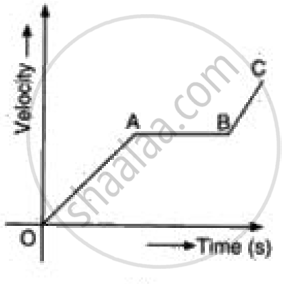
Correct your friend who says that acceleration gives the idea of how fast the position changes.
The acceleration of the body that moves with a uniform velocity will be ______.
What is meant by negative acceleration?
A bus accelerating with 4ms-2 changes its speed from 60ms_1 to a certain value in 5s. The final speed is ______.
Acceleration is defined as the rate of change of ______.
If a body starts from rest, what can be said about the acceleration of the body?
