Advertisements
Advertisements
प्रश्न
Light of wavelength 600 nm that falls on a pair of slits producing interference pattern on a screen in which the bright fringes are separated by 7.2 mm. What must be the wavelength of another light which produces bright fringes separated by 8.1 mm with the same apparatus?
Advertisements
उत्तर
`beta = (lambda "D")/"d"`
β ∝ λ
`beta_1/beta_2 = lambda_1/lambda_2`
Given: β1 = 7.2 mm, β2 = 8.1 mm, λ1 = 600 nm, λ2 = ?
`lambda_2 = (lambda_1 beta_2)/beta_1`
`lambda_2 = (600 xx 8.1)/7.2`
λ2 = 675 nm
APPEARS IN
संबंधित प्रश्न
Answer in brief:
Explain what is the optical path length. How is it different from actual path length?
Why two light sources must be of equal intensity to obtain a well-defined interference pattern?
What is interference?
Describe geometry of the Young’s double slit experiment with the help of a ray diagram. What is fringe width? Obtain an expression of it. Write the conditions for constructive as well as destructive interference.
What are coherent sources of light?
What is interference of light?
What is intensity (or) amplitude division?
What is a bandwidth of interference pattern?
Obtain the equation for resultant intensity due to interference of light.
Two independent monochromatic sources cannot act as coherent sources, why?
Does diffraction take place at Young’s double-slit?
In Young's double-slit experiment, if the width of the 2nd bright fringe is 4 x 10⁻² cm, then the width of the 4th bright fringe will be ______ cm.
A graph is plotted between the fringe-width Z and the distance D between the slit and eye-piece, keeping other adjustment same. The correct graph is
A.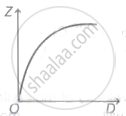 |
B.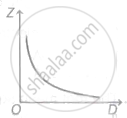 |
C.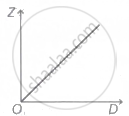 |
D.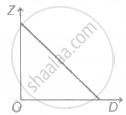 |
If the monochromatic source in Young's double slit experiment is white light, then ____________.
The distance between the first and ninth bright fringes formed in a biprism experiment is ______.
(`lambda` = 6000 A, D = 1.0 m, d = 1.2 mm)
Two sources of light 0.5 mm apart are placed at a distance of 2.4 m and wavelength of light is 5000 Å. The phase difference between the two light waves interfering on the screen at a point at a distance 3 mm from central bright band is ____________.
In the biprism experiment, the fringe width is 0.4 mm. What is the distance between the 4th dark band and the 6th bright band on the same side?
Show graphically the intensity distribution in a single slit diffraction pattern.
The interference pattern is obtained with two coherent light sources of intensity ratio 4 : 1. And the ratio `("I"_"max" - "I"_"min")/("I"_"max" + "I"_"min")` is `5/x`. Then the value of x will be equal to ______.
In a biprism experiment, fifth dark fringe is obtained at a point. A thin transparent film of refractive index ‘μ’ is placed in one of the interfering paths. Now 7th bright fringe is obtained at the same point. If ‘A’ is the wavelength of light used, the thickness of film is equal to ______.
