Advertisements
Advertisements
प्रश्न
Answer in brief:
Explain what is the optical path length. How is it different from actual path length?
What is Optical Path length? How is it different from the actual Path length?
Advertisements
उत्तर १
Consider, a light wave with an angular frequency of w and a wave vector of k travelling in the x-direction through a vacuum. The phase of this wave is (kx - ωt). In a vacuum, light speed at c, but in a medium, it speeds at v.
k = `(2pi)/lambda = (2pi v)/(v lambda) = omega/v` as ω = 2πv and v = vλ, where v is the frequency of light.
If the wave travels a distance Δ x, its phase changes by Δ Φ = kΔx = ω Δx/v.
Similarly, if the wave is travelling in vacuum,
k = ω/c and Δ Φ = ω Δ x/c
Now, consider a wave travelling a distance Δ x in the medium, the phase difference generated is,
Δ Φ' = k' Δ x = ωn Δ x/c = ω Δ x'/c ...(1)
where Δ x' = n Δ x .....(2)
The distance nΔ x is called the optical path length of the light in the medium; it is the distance the light would have travelled in the same time t in vacuum (with the speed c).
The optical path length in a medium is the corresponding path in a vacuum that light traverses at the same time as it does in the medium.
Now, speed = `"distance"/"time"`
∴ time = `"distance"/"speed"`
∴ t = `"d"_"medium"/"v"_"medium" = "d"_"vaccum"/"v"_"vaccum"`
Hence, the optical path = `"d"_"vacuum"`
`= "v"_"vaccum"/"v"_"medium" xx "d"_"medium"`
`= "n" xx "d"_"medium"`
Thus, a distance d travelled in a medium of refractive index n introduces a path difference = nd - d = d (n - 1) over a ray travelling equal distance through vacuum.
उत्तर २
i. When a wave travels a distance Δx through a medium having a refractive index of n, its phase changes by the same amount as it would if the wave had travelled a distance nΔx in a vacuum.
ii. Thus, a path length of Δx in a medium of refractive index n is equivalent to a path length of nΔx in a vacuum.
iii. nΔx is called the optical path travelled by a wave.
iv. This means, the optical path through a medium is the effective path travelled by light in a vacuum to generate the same phase difference.
v. Optical path in a medium can also be defined as the corresponding path in a vacuum that the light travels at the same time as it takes in the given medium.
i.e., time = `"d"_"medium"/"v"_"medium" = "d"_"vacuum"/"v"_"vacuum"`
∴ `"d"_"vacuum" = "v"_"vacuum"/"v"_"medium" xx "d"_"medium" = "n" xx "d"_"medium"`
But `"d"_"vacuum"` = Optical path
∴ Optical path = n × `"d"_"medium"`
Thus, a distance d travelled in a medium of refractive index n introduces a path difference = nd - d = d(n - 1) over a ray travelling an equal distance through the vacuum.
संबंधित प्रश्न
Write the important characteristic features by which the interference can be distinguished from the observed diffraction pattern.
Laser light of wavelength 630 nm is incident on a pair of slits which are separated by 1.8 mm. If the screen is kept 80 cm away from the two slits, calculate:
1) fringe separation i.e. fringe width.
2) distance of 10th bright fringe from the centre of the interference pattern
Answer the following question.
Describe any two characteristic features which distinguish between interference and diffraction phenomena. Derive the expression for the intensity at a point of the interference pattern in Young's double-slit experiment.
Describe Young's double-slit interference experiment and derive conditions for occurrence of dark and bright fringes on the screen. Define fringe width and derive a formula for it.
What are the conditions for obtaining a good interference pattern? Give reasons.
What is interference?
What are coherent sources of light?
Explain constructive and destructive interference with the help of a diagram?
What is interference of light?
Explain Young’s double-slit experimental setup and obtain the equation for path difference.
Two independent monochromatic sources cannot act as coherent sources, why?
In Young's double slit experiment green light is incident on the two slits. The interference pattern is observed on a screen. Which one of the following changes would cause the observed fringes to be more closely spaced?
A graph is plotted between the fringe-width Z and the distance D between the slit and eye-piece, keeping other adjustment same. The correct graph is
A.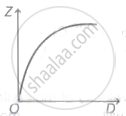 |
B.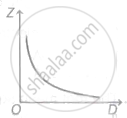 |
C.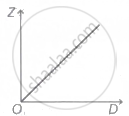 |
D.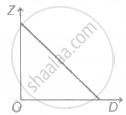 |
A metal rod has length, cross-sectional area and Young's modulus as L, A and Y, respectively. If the elongation in the rod produced is l, then work done is proportional to ______.
If the monochromatic source in Young's double slit experiment is white light, then ____________.
On a rainy day, a small oil film on water shows brilliant colours. This is due to ____________.
Band width for red light of wavelength 6600 Å is 0.42 mm. If red Light is replaced by blue light of wavelength 4400 Å, then the change m bandwidth will be ____________.
In Young's experiment for the interference of light, the separation between the silts is d and the distance of the screen from the slits is D. If D is increased by 0.6% and d is decreased by 0.2%, then for the light of a given wavelength, which one of the following is true?
"The fringe width ____________."
In a Young's double-slit experiment, the intensity at a point where the path difference is `lambda/3` (`lambda` being the wavelength of the light used) is I. If I0 denotes the maximum intensity, then `"I"/"I"_0` is equal to ______.
The phenomenon of interference is based on ______.
If two waves represented by `"y"_1 = 3 "sin" omega "t"` and `"y"_2 = 5 "sin" (omega "t" + pi/3)` interfere at a point, then the amplitude of the resulting wave will be about ____________.
In the biprism experiment, the fringe width is 0.4 mm. What is the distance between the 4th dark band and the 6th bright band on the same side?
The graph shows the variation of fringe width (β) versus distance of the screen from the plane of the slits (D) in Young's double-slit experiment Keeping other parameters the same. The wavelength of light used can be calculated as d = distance between the slits ______

In Young's double-slit experiment, the distance between the slits is 3 mm and the slits are 2 m away from the screen. Two interference patterns can be obtained on the screen due to light of wavelength 480 nm and 600 run respectively. The separation on the screen between the 5th order bright fringes on the two interference patterns is ______
What is meant by Constructive interference?
In a double-slit experiment, the optical path difference between the waves coming from two coherent sources at a point P on one side of the central bright is 7.5 µm and that at a point Q on the other side of the central bright fringe and 1.8 µm. How many bright and dark fringes are observed between points P and Q if the wavelength of light used is 600 nm?
In biprism experiment, the distance of 20th bright band from the central bright band is 1.2 cm. Without changing the experimental set-up, the distance of 30th bright band from the central bright band will be ______.
In biprism experiment, the 3rd dark band is formed opposite to one of the slits. The wavelength of light used is ______.
(D = distance between source and screen, d = distance between the two narrow slits)
