Advertisements
Advertisements
प्रश्न
In the poem Breaking Out. the poet shows the gradual transformation of a young girl into a confident and independent individual who breaks the conventional stereotypes of society. Discuss with close reference to the text.
Advertisements
उत्तर
“Breaking Out” by Marge Piercy is a modern poem of inspiration and of the rebellious spirit. The American poet, novelist and social activist Marge Piercy has been known for her feminist writings. The poem, first published in the Harbor Review in 1984, is a specimen of the tone and themes of her poetry. And I have heard people hailing this poem as one of their all-time favorites. The poem ‘Breaking Out’ is an autobiographical picture of the sufferings, feelings, and rebellion of an adolescent girl in a ‘depressed’ family in mid-twentieth-century America. The poet narrates how she grew up, ill-treated by her parents, from childhood to adolescence. She felt bad for herself and even for her mother as women had to do utterly useless things at home and had no freedom. She dreamed of coming out of her sufferings when she grew. And one day she broke the stick after a beating and felt “there were things that I should learn to break”. The poem starts rather abruptly with a question that apparently aims to talk about the first political act in the girl’s life. But here, ‘political’ is in the sense that it was all about a protest, a revolt against something unjust. After that motivated deed, the poet can see the two different ways of life (two doors) nearing each other. The ‘two doors‘ are the metaphors for the two separate ways of life for her: one is to stick to the established norms of the society, to bear with the humiliation and the captivity; another is to break away from the stereotypes, to upset the status quo, to demand the freedom to do what she likes. The poem is not a destructive one, in fact, it’s all about gaining the power, a courageous move in the right direction. So, the title of the poem is not only about breaking a stick, but the greater implication in it for breaking those outdated things that kept the society lagging. It is indicative of the poet’s breaking out from the stereotypes that her mother could not. This poem really inspires all of us to support the right things and take stand against the wrong things.
APPEARS IN
संबंधित प्रश्न
In the following items, sentence A is complete, while sentence B is not. Complete sentence B, making it as similar as possible to sentence A. Write sentence B.
(A) His attitude towards his parents has always puzzled the
(B) I have ..................................................................................
Fill in the blanks in the passage givben below with the appropriate form of the verb given in brackets. Do not write the passage, but write the verbs in the correct order.
One day I ____________ (1)(be) in the lunch line, and there I saw a pile of apples. The teacher-incharge _____________ (2)(state) at me and said, “Just __________ (3)(take) one. God ________ (4)(watch)”. So, I ____________ (5)(take) an apple, and the line __________ (6)(move) along. At the next table there ____________ (7)(be) a pile of chocolate chip cookies. I ____________ (8)(not know) what to do. “Put,” the kid behind me ____________ (9)(whisper), “_____________ (10)(take) all you want. God’s watching the apples. ”
Explain the use of the rhetorical device like the apostrophe by the poet.
What is the encaged bird fearful of ?
How is the theme of self-awareness shown in the poem “Caged Bird” by Maya Angelou?
Explain ‘may his tribe increase.’
What does the reader learn about the characters of the narrator and the old man, in Ernest Hemingway “Old Man and the Bridge?
How does the story “A Horse and Two Goats” develop the idea of the need to interact with people who have vastly different identities from your own?
I was laid________for three weeks with a broken leg.
Read the following passage carefully and answer the questions that follow:
Lying in bed, Swami realized with a shudder that it was Monday morning. It looked as though only a moment ago, it had been the last period on Friday; already, Monday was here. He hoped that an earthquake would reduce the school building to dust but that my good building, Albert Mission School, had withstood similar prayers for over a hundred years now.
At nine o'clock, Swaminathan wailed, “I have a headache.”
His mother said, “Why don’t you go to school in a bullock cart?”
“So that I may be completely dead at the other end? Have you any idea what it means to be jolted in a cart?”
“Have you any important lessons today?”
“Important! Bah! That geography teacher has been teaching the same lesson for over a year now. And we have arithmetic, which means for a whole period we are going to be beaten by the teacher............ Important lessons!”
And Mother generously suggested that Swami might stay at home.
At 9:30, when he ought to have been lining up in the school prayer hall, Swami was lying on the bench in Mother’s room.
Father asked him, “Have you no school today?”
“Headache,” Swami replied,
“Nonsense! Dress up and go.”
“Headache.”
“Loaf about less on Sundays, and you will be without a headache on Monday.”
Swami knew how stubborn his father could be and changed his tactics.
“I can’t go so late to class.”
“I agree, but you’ll have to; it is your own fault. You should have asked me before deciding to stay away.”
“What will the teacher think if I go so late?”
“Tell him you had a headache, and so are late.”
“He will beat me if I say so.”
“Will he? Let us see. What is his name?”
“Mr. Samuel.”
“Does he beat the boys?”
“He is very violent, especially with boys who come late. Some days ago, a boy was made to stay on his knees for a whole period in a corner of the class because he came late, and after getting six cuts from the cane and having his ears twisted, I wouldn’t like to go late to Mr Samuel’s class.”
“If he is so violent, why not tell your headmaster about it?”
“They say that even the headmaster is afraid of him. He is such a violent man.”
And then Swami gave a lurid account of Samuel’s violence; how when he started caning, he would not stop till he saw blood on the boy’s hand, which he made the boy press to his forehead like a Vermillion marking. Swami hoped his father would be made to see that he couldn’t go to his class late. But his father’s behaviour took an unexpected turn. He became excited.
“What do these people mean by beating our children? They must be driven out of service. I will see…..”
The result was that he proposed to send Swami late to his class as a kind of challenge. He was also going to send a letter with Swami to the headmaster. No amount of protest from Swami was of any avail: Swami had to go to school.
By the time he was ready, his father had composed a long letter to the headmaster, put it in an envelope, and sealed it.
“What have you written, father?” Swaminathan asked apprehensively.
“Nothing for you. Give it to your headmaster and go to your class.”
Swami’s father did not know the truth—that, actually, Mr. Samuel was a very kind gentleman.
(a) Give the meaning of each of the following words as used in the passage. (3)
One-word answers or short phrases will be accepted.
- jolted
- stubborn
- avail
(b) Answer the following questions briefly in your own words:
- What did Swami wish for on a Monday morning? Why was his wish unlikely to be answered? (2)
- Which sentence tells us that Swami’s father was completely unsympathetic to his son’s headache? (2)
- In what way was Swami’s mother’s response different from his father’s? (2)
- Why did Swami give a colourful account of Mr. Samuel to his father? (2)
- In what way did Father’s behaviour take an unexpected turn? (2)
- What was Swami finally ordered to do by his father? (2)
(c)
(i) In not more than 60 words, describe how Swami tries to prove that Mr. Samuel is a violent man. (8)
(ii) Give a title to your summary in 3
(c). Give a reason to justify your choice. (2)
Fill in each of the numbered blanks with the correct form of the word given in brackets. Do not copy the passage, but write in the correct serial order the word or phrase appropriate to the blank space.
Example:
(0) One morning, I (0) ……. (see) the python curled up on the dressing table.
Answer: saw.
It was (1) ……. (gaze) at its own reflection in the mirror. I (2) ……… (go) for grandfather, but by the time we (3) ……… (return) to the room, the python (4) …….. (move) on. He was seen in the garden, and once the cook saw him, (5) ……… (crawl) up the ladder to the roof. Then we (6) …….. (find) him on the dressing table again, (7) (admire) himself in the mirror. “He’s trying to look better for Aunt Mabel,” I said. I (8) ……. (regret) this remark immediately because grandmother overheard it and held up my pocket money for the rest of the week!
"School days are the happiest days of our lives." Express your views either for or against this statement.
Who was Roger Presbury and how was John Garrideb connected with him?
Write a character sketch of your family member.
Write in 100 words what the cherry tree in the poem symbolises.
Write down the consequences of the following occurrences with the help of the play.
Katherine encourages Dr. Stockmann to proceed in his attempts in the cause of public attempts.
Look at the image of the familiar advertisement given below. Identify the product and try to frame your own slogan for them.

Look at the picture given below and frame your own slogan.

What are the themes of the singers’ songs?
You are waiting to board a train in a railway station. The train is delayed by an hour. Write a paragraph about the crowded scene in the railway station based on your observation.
| vendors | tea vendors | shops | families | piles of luggage |
| porters | trolley | scroll board | announcement | ticket counter queue |

Read the acrostic poem on ‘Friend’. Write an acrostic poem like this on ‘Tree’.
| Friend | Tree |
|
Friends always love each other |
T |
|
Respect each Other |
R |
|
Interact with each other |
E |
|
Enjoy playing with each Other |
E |
|
Never hurt your friends |
|
|
Do everything together |
Find example of alliteration and write them in the blank.
in a blaze of heat
with sunny smiles.
What will Glory say? Do you think you can help Glory by giving some ideas to Ravi?
| Glory |
You can write a story about the ______ and the ______. |
| Ravi | Great idea! Thank you! |
| Glory | ______ Ravi. |
Two stories got mixed up. Sort them out and write them in the appropriate boxes.
- We thought the lion had eaten someone.
- Suddenly the kite lifted him off the ground and took him over the treetops.
- He saw a shoe in the lion's cage.
- Finally, the kite brought him back to the park.
- Our class had gone to the zoo.
- Puran was flying the brand new kite in the park.
- Some children stood and screamed, and some ran to the Director of the zoo.
- Puran was frightened and excited.
- The lion had not eaten anyone, because the shoe was one of the lion's toys.
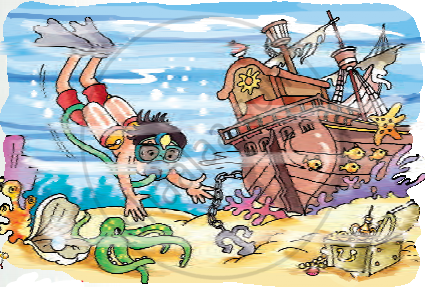
Work in groups of four. See the picture of a shipwreck at the bottom of the ocean.
Suppose you went deep-sea diving. What would you find? Think of all the words that come to your mind, then build a paragraph. Share your story with other groups.
Answer the question by looking at the picture.
Example: What is happening in picture 5?

Find one word from the story that means
happy d ______.
Why didn’t the grandmother feel sentimental when the author went abroad for higher education?
According to Mary Kom, what was the reason for her losing in the finals?
The photographer told him to ______.
