Advertisements
Advertisements
प्रश्न
Find out when the International Day of Friendship is celebrated.
Advertisements
उत्तर
International day of friendship is celebrated every year on 30 July.
APPEARS IN
संबंधित प्रश्न
What docs the line “and his shadow shouts on a nightmare scream” mean?
It was roses, roses, all the way,
With myrtle mixed in my path like mad;
The house-roofs seemed to heave and sway,
The church-spires flamed, such flags they had,
A year ago on this very day.
Read the above lines and answer the question that follow.
Explain with reference to the context.
Write a short note on Abou bin Adhem.
Besides being an amusing tale about a failure to communicate the story “A Horse and Two Goats” makes some crucial points also. Justify.
Discuss theme of kindness and compassion in “Hearts and Hands” by O. Henry?
You are the editor of your school magazine. You have recently attended a cultural program in your city. Write an account of this program (in approximately 300 words) using the points given below:
| Date and venue — occasion — Chief Guest — other invitees — inauguration — events —other important features — highlights — reaction of audience — conclusion. |
Fill in the blank with an appropriate word:
"Please write__________ what I tell you otherwise you will forget," the teacher said
I have never worn a more ill-fitting suit. (End: …………..ever worn.)
Raina :
[timidly] Nine thousand hotels?
Bluntschli :
Hotels! Nonsense. If you only knew! Oh, it's too ridiculous. Excuse me: I must give my fellow orders about starting. [He leaves the room hastily, with the documents in his hand].
Louka :
[knowing instinctively that she can annoy Raina by disparaging Bluntschli] He has not much heart, that Swiss. He has not a word of grief for his poor father.
Raina :
[bitterly] Grief! A man who has been doing nothing but killing people for years! What does he care about? What does any soldier care about? [She goes to the door, restraining her tears with difficulty].
Louka :
Major Saranoff has been fighting too, and he has plenty of heart left. [Raina, at the door, draws herself up haughtily and goes out].
(i) What news has Bluntschli just received?
(ii) What makes Raina ask, `Nine thousand hotels'?
(iii) Why is Bluntschli in such a hurry to leave? What does Louka comment about him?
(iv) Why is Raina upset with Bluntschli?
(v) Why in your opinion, does Louka compare Bluntschli to Sergius? What does she comment when Raina leaves the room?
(vi) Who enters the room at this point? What news does he give Louka?
Read the extract given below and answer the questions that follow:
These three had elaborated old Major’s teachings into a complete system of thought, to which they gave the name of Animalism.
(i) Who had elaborated on Old Major’s teachings?
(ii) When and where did they hold their secret meetings? How did the meetings end?
(iii) What had the Old Major said about the ‘nature of this life of ours’?
(iv) Who were the most faithful disciples? How did they contribute towards the preparations for the rebellion?
(v) How did the animals celebrate the day after the rebellion?
I have never seen a film as bad as this. ·
(Begin: This is ........................................ )
Give reasons for the following.
The boy king changed his name from Tutankhaten to Tutankhamun.
Why are the last two lines put within brackets?
Based on the text enact your own version of the play. Work in pairs.
Find out the information about the qualification and eligibility required in the profession related to wildlife such as:
Geologist
Prompt reporting is of strategic importance during a war. Refer to the above extract and explain.
Comment on the following characters depicted in the poem, in a sentence or a phrase.
| On the Nose | On the Eyes |
‘Invictus’ is an example of Traditional Poetry. ‘Please Listen’ is an example of Free Verse.
Prepare attractive advertisement using the hints given below.
Home appliances – Aadi Sale – 20-50% - Special Combo Offers – Muthusamy & Co., Raja Street, Gingee.
The Pooja holidays are about to start. Prasanth and Deepak are friends. Both their families have planned to go on a trip to Munnar. Develop a conversation on how they plan for their trip.
|
Plan:
|
Write a narrative paragraph on Kamarajar, using the given information and add more information on your own.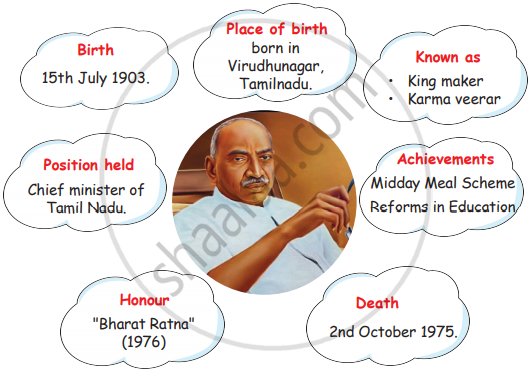
Fill up the withdrawal form to withdraw Rs.200 from your Savings Account.

Correct the use of the describing word in the following sentence.
Which is the lightest of the two parcels?
Connect the pairs of sentences below using and or but.
- Everyone has gone to sleep.
- I want to read my book.
How did Sletherby’s judgment of Bertie turn out to be a wrong one?
How did the other Women react to Woman 5?
Write an essay of about 200 word
The profession you would like to choose
Read the given sentence and underline the no word.
There is nothing to do.
What reason does Portia give for refusing the Duke's invitation to dinner?
What makes you angry?
